
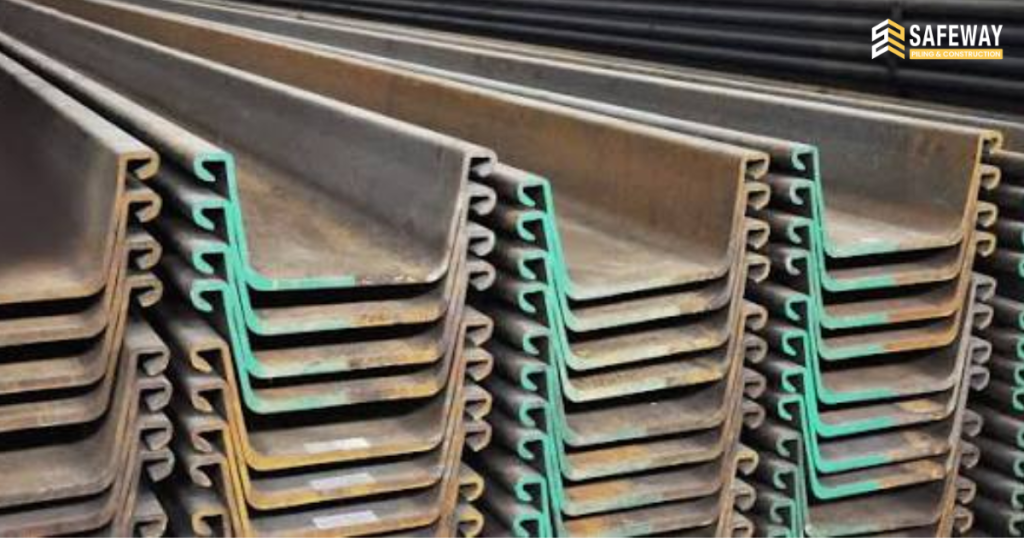
Sheet pile driving in hard soil requires proper equipment, careful planning, and a suitable installation method. Hard soil can create high driving resistance and make it difficult to reach the required sheet pile depth. Contractors commonly face challenges when driving sheet piles through dense sand, stiff clay, gravel, compacted fill, or mixed ground conditions.
The driving method depends on soil type, sheet pile profile, pile length, required penetration depth, equipment access, nearby structures, and project requirements. Contractors can use vibratory hammers, impact hammers, hydraulic pressing systems, or combined methods to drive sheet piles into difficult ground.
Proper sheet pile driving in hard soil helps contractors achieve the required wall alignment, penetration depth, and structural performance. However, excessive driving force can damage the pile, deform interlocks, create vibration, or affect nearby structures. Contractors should therefore select suitable equipment and monitor the installation process throughout the work.
What Is Sheet Pile Driving in Hard Soil?
Sheet pile driving in hard soil refers to installing steel sheet piles into dense, stiff, or highly resistant ground conditions. The soil creates greater resistance against pile penetration, so contractors may need higher-capacity equipment and a carefully controlled driving process.
Workers normally position the sheet pile at the required location, connect the pile to suitable driving equipment, and gradually drive it into the ground. The team monitors penetration, alignment, equipment performance, and surrounding ground conditions during installation.
Hard soil can make standard driving methods less effective. Contractors may need to adjust the driving sequence, use pre-augering, change hammer settings, or combine different installation techniques according to site conditions.
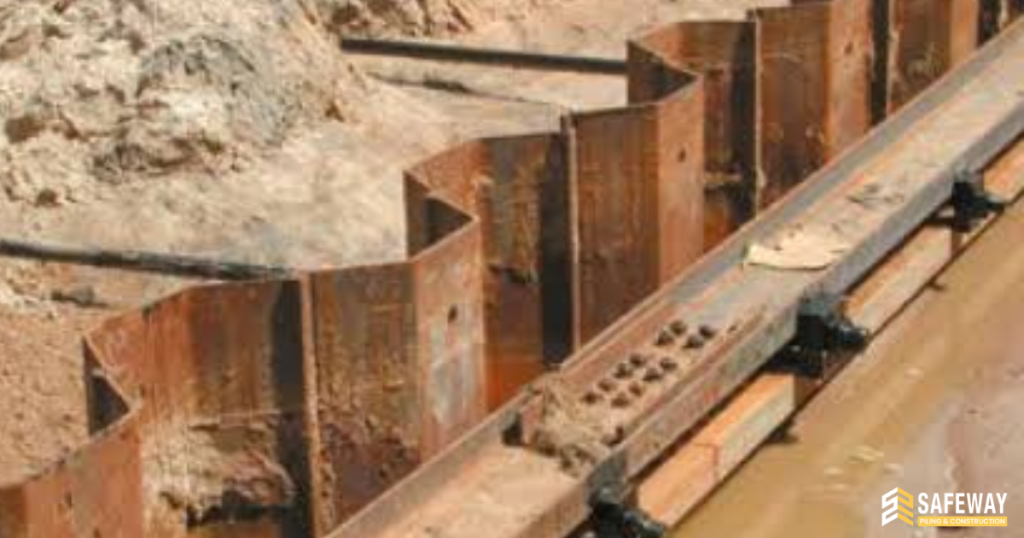
Why Is Sheet Pile Driving in Hard Soil Challenging?
Hard ground can significantly increase the resistance against sheet pile penetration. Contractors need to understand these conditions before selecting the installation equipment.
Main challenges include:
- High Driving Resistance: Dense or stiff soil can resist pile penetration and increase the force required to drive the sheet pile.
- Slow Installation: Hard soil can reduce driving speed and increase the time required to reach the design depth.
- Pile Damage: Excessive impact force can bend the sheet pile, damage the interlocks, or deform the pile section.
- Equipment Stress: High soil resistance can place additional loads on hammers, cranes, clamps, and other equipment.
- Alignment Problems: Strong resistance can cause the pile to move away from its planned position during driving.
- Ground Vibration: Impact and vibratory equipment can create vibration that affects nearby buildings, roads, utilities, or other structures.
- Limited Penetration: Extremely hard layers can prevent the pile from reaching the required depth.
- Changing Soil Conditions: Mixed layers of clay, sand, gravel, and fill can create different levels of resistance during the same installation.
Common Methods of Sheet Pile Driving in Hard Soil
Different methods can help contractors install sheet piles in difficult ground. The selected method should match the soil conditions, pile specifications, project requirements, and surrounding environment.
1. Vibratory Hammer: A vibratory hammer creates rapid vertical vibration that helps reduce friction between the sheet pile and surrounding soil. Contractors commonly use vibratory hammers for sheet pile installation because they can provide efficient penetration in many soil conditions. Vibratory driving can work well in dense soil, but contractors should select a hammer with suitable capacity for the pile size and ground resistance. Operators should also monitor vibration when working near sensitive structures.
2. Impact Hammer: An impact hammer delivers repeated blows to the sheet pile head. The impact energy helps overcome soil resistance and drive the pile deeper into the ground. Contractors may use impact hammers when vibratory equipment cannot achieve the required penetration. However, impact driving can create higher noise and vibration, so the project team should consider nearby buildings, utilities, and environmental restrictions.
3. Hydraulic Pressing: Hydraulic pressing equipment pushes sheet piles into the ground using controlled hydraulic force. This method can provide lower vibration compared with traditional impact driving. Hydraulic pressing can suit projects where vibration control is important. However, the method requires suitable equipment access and sufficient reaction support.
4. Pre-augering: Pre-augering involves creating a smaller hole or loosening the soil before driving the sheet pile. This technique can reduce resistance in particularly difficult ground conditions. Contractors should carefully control the size and depth of the pre-augered hole. Excessive soil removal can affect pile support and surrounding ground stability.
5. Combined Driving Methods: Some projects require more than one technique. Contractors may use vibration to start the pile and impact driving to achieve the final penetration depth. The team can also use pre-augering before vibratory or impact driving when hard layers create excessive resistance. The selected combination should follow the approved construction method.
Step-by-Step Guide to Sheet Pile Driving in Hard Soil
- Investigate the Soil Conditions: The team reviews available geotechnical information to understand soil layers, density, groundwater, hard strata, and expected driving resistance.
- Review the Sheet Pile Design: Contractors check the pile profile, thickness, length, section properties, interlock configuration, and required penetration depth.
- Inspect the Site: Workers inspect access conditions, working space, nearby structures, overhead hazards, underground utilities, and ground stability.
- Select the Driving Method: The team selects a vibratory hammer, impact hammer, hydraulic pressing system, pre-augering method, or combined technique according to project conditions.
- Select the Driving Equipment: Contractors choose a crane, hammer, clamp, guide frame, and other accessories with suitable capacity for the pile and expected soil resistance.
- Prepare the Driving Area: Workers establish a stable working platform and prepare the pile storage and handling areas before installation begins.
- Position the Guide Frame: A guide frame can help maintain the correct pile position and alignment during driving.
- Lift the Sheet Pile: The crane carefully lifts the pile and moves it to the installation position. Workers should control the pile during handling.
- Position the Sheet Pile: Workers place the pile at the required location and check its vertical or designed inclination before driving.
- Attach the Hammer: The operator securely connects the driving hammer and pile clamp to the sheet pile.
- Start Controlled Driving: The operator begins driving at a controlled rate while monitoring penetration and alignment.
- Monitor Driving Resistance: Workers observe penetration progress and equipment response. Increasing resistance may indicate a dense or hard soil layer.
- Adjust the Driving Method: If the pile cannot penetrate effectively, contractors may adjust hammer settings, change equipment, use pre-augering, or apply another approved method.
- Check Alignment: Workers continuously check the pile position to prevent excessive deviation from the planned wall alignment.
- Reach the Required Depth: The team continues installation until the pile reaches the required design depth or meets the approved refusal criteria.
- Inspect the Installed Pile: Workers check the pile alignment, interlocks, visible damage, and final position after driving.
- Continue the Wall Installation: Contractors install the remaining sheet piles according to the approved sequence and maintain proper interlock engagement.
Vibratory Hammers for Hard Soil
Vibratory hammers can provide efficient sheet pile driving in hard soil when the selected equipment has enough capacity for the expected resistance. The hammer transfers vibration through the pile and helps reduce friction between the pile surface and surrounding soil.
Main benefits include:
- Fast Installation: Vibratory hammers can drive suitable sheet piles efficiently.
- Reduced Soil Friction: Vibration can help reduce resistance around the pile.
- Continuous Operation: Operators can monitor pile penetration during the driving process.
- Suitable for Many Projects: Contractors can use vibratory hammers for retaining walls, cofferdams, excavation support, and other sheet pile applications.
- Controlled Driving: Operators can adjust the installation process according to pile movement and soil response.
Contractors should not assume that every vibratory hammer can drive a sheet pile through hard soil. Equipment capacity must match the pile section, length, soil resistance, and required penetration.
Impact Hammers for Hard Soil
Impact hammers can provide high driving energy when sheet piles encounter strong soil resistance. The repeated impact helps overcome resistance and push the pile deeper into the ground.
Impact driving can become useful when a vibratory hammer cannot achieve the required depth. However, excessive impact energy can damage the sheet pile or interlocks.
Contractors should select suitable hammer energy and monitor the pile during installation. They should also consider noise and vibration when working near buildings, roads, utilities, or other sensitive structures.
Factors That Affect Sheet Pile Driving in Hard Soil
Several conditions affect the difficulty, speed, and safety of Sheet Pile Driving in Hard Soil.
- Soil Density: Dense sand can create high friction around the sheet pile and increase driving resistance.
- Soil Strength: Stiff clay can hold the pile firmly and require greater driving force.
- Gravel Content: Gravel and coarse materials can obstruct pile penetration and increase resistance.
- Hard Layers: Rock, weathered rock, cemented soil, or very dense layers can prevent normal pile penetration.
- Pile Profile: Different sheet pile profiles have different shapes, weights, and surface areas. These characteristics affect driving resistance.
- Pile Length: Longer piles have greater surface contact with the surrounding soil. This can increase friction during installation.
- Pile Thickness: Thicker and heavier sections may require higher-capacity driving equipment.
- Installation Depth: Deeper penetration generally increases the amount of soil resistance acting on the pile.
- Groundwater: Groundwater conditions can influence soil behavior and pile driving performance.
- Nearby Structures: Buildings and utilities can restrict the use of high-vibration or high-impact equipment.
How Soil Conditions Affect Sheet Pile Driving
Different soil types create different driving conditions.
- Soft Clay: Soft clay generally provides lower driving resistance, but workers should still monitor alignment and ground movement.
- Stiff Clay: Stiff clay can hold sheet piles tightly and may require higher-capacity equipment.
- Dense Sand: Dense sand can create significant friction and may require strong vibratory or impact equipment.
- Loose Sand: Loose sand may allow easier penetration, but workers should monitor ground movement.
- Gravel: Gravel can increase resistance and may obstruct the pile during installation.
- Compacted Fill: Construction fill can contain concrete, stones, debris, or dense materials that make pile driving difficult.
- Mixed Soil: Different soil layers can cause changing driving resistance throughout the pile depth.
- Hard Strata: Hard layers can stop normal penetration and may require pre-augering or another approved method.
Challenges During Sheet Pile Driving in Hard Soil
Contractors can face several challenges during difficult ground installation.
- Pile Refusal: The pile may stop penetrating before reaching the planned depth.
- Pile Bending: Excessive driving force can deform the sheet pile.
- Interlock Damage: High driving resistance can damage or separate pile interlocks.
- Pile Deflection: The pile can move away from the planned alignment.
- Equipment Overloading: High resistance can place excessive loads on the hammer and crane.
- Excessive Vibration: Vibratory or impact equipment can affect nearby structures.
- High Noise Levels: Impact driving can create significant construction noise.
- Slow Progress: Hard layers can increase installation time and project costs.
- Pile Obstruction: Rocks, concrete pieces, or other buried materials can block penetration.
- Uneven Driving Resistance: Mixed soil conditions can make driving performance difficult to predict.
Best Practices for Sheet Pile Driving in Hard Soil
Following proper practices can help contractors complete sheet pile driving in hard soil more efficiently.
- Study the Geotechnical Information: Review soil investigation data before selecting the driving equipment and method.
- Select the Correct Pile Profile: Choose a sheet pile section that can withstand the expected driving stresses and structural loads.
- Use Suitable Driving Equipment: Match the hammer capacity with pile specifications and expected soil resistance.
- Prepare a Stable Working Platform: Cranes and heavy equipment need stable ground for safe and controlled operation.
- Use Guide Frames: Guide frames can help maintain pile alignment during driving.
- Start With Controlled Energy: Begin driving at a suitable setting and increase energy only when required.
- Monitor Pile Alignment: Check the pile position regularly to prevent cumulative wall deviation.
- Monitor Driving Performance: Track penetration rate, hammer response, and changes in soil resistance.
- Protect the Interlocks: Handle and drive the piles carefully to reduce interlock damage.
- Monitor Nearby Structures: Check nearby buildings, roads, utilities, and other sensitive structures when vibration or impact driving occurs.
- Use Pre-Augering When Required: Consider pre-augering when hard ground prevents effective pile penetration and the approved construction method allows it.
- Inspect Installed Piles: Check the final pile position, alignment, visible damage, and interlock condition after installation.
Safety Considerations During Sheet Pile Driving in Hard Soil
Sheet pile driving in hard soil involves heavy steel piles, cranes, driving hammers, lifting equipment, and other machinery. Contractors need strong safety controls throughout the installation process.
Safety measures include:
- Inspect cranes and driving equipment before use.
- Check lifting slings, shackles, clamps, and hooks before handling piles.
- Keep workers away from suspended sheet piles.
- Establish a controlled pile-driving zone.
- Use trained and authorized equipment operators.
- Check crane ground stability before installation.
- Maintain safe clearance from power lines and other hazards.
- Use suitable personal protective equipment.
- Monitor vibration and noise when required.
- Check nearby structures and underground utilities.
- Stop work if equipment or ground conditions become unsafe.
- Follow the approved lifting, driving, and site safety procedures.
Proper safety planning helps protect workers, equipment, nearby structures, and the surrounding area.
How Safeway Piling & Construction Supports Sheet Pile Projects
Safeway Piling & Construction provides professional piling and construction support for projects in Bangladesh. Our team understands the importance of proper planning when contractors need to install sheet piles in different soil conditions.
We support sheet pile requirements for excavation support, temporary retaining structures, cofferdams, riverbank protection, basement construction, marine projects, and other construction applications.
- Sheet Pile Supply: We provide steel sheet pile supply solutions based on project requirements. Our team helps clients consider suitable pile specifications and quantities.
- Project Requirement Support: We review important project information such as pile size, length, application, and site conditions.
- Driving Equipment Coordination: Suitable driving equipment can improve installation efficiency. We help clients understand equipment requirements based on project conditions.
- Construction Support: We provide project-focused support for sheet pile applications and help clients coordinate material and construction requirements.
Benefits of Choosing Safeway Piling & Construction
Selecting an experienced piling company can help contractors manage sheet pile requirements more effectively.
- Reliable Sheet Pile Supply: Safeway Piling & Construction provides steel sheet pile supply solutions for different construction projects.
- Project-Based Solutions: Each project has different soil conditions, pile requirements, and site limitations. We help clients consider these factors when planning sheet pile solutions.
- Professional Support: Our team provides project-focused assistance and clear communication to help clients understand their material and equipment requirements.
- Construction Application Support: We support sheet pile requirements for excavation, retaining walls, basement construction, cofferdams, marine works, riverbank protection, and other construction projects.
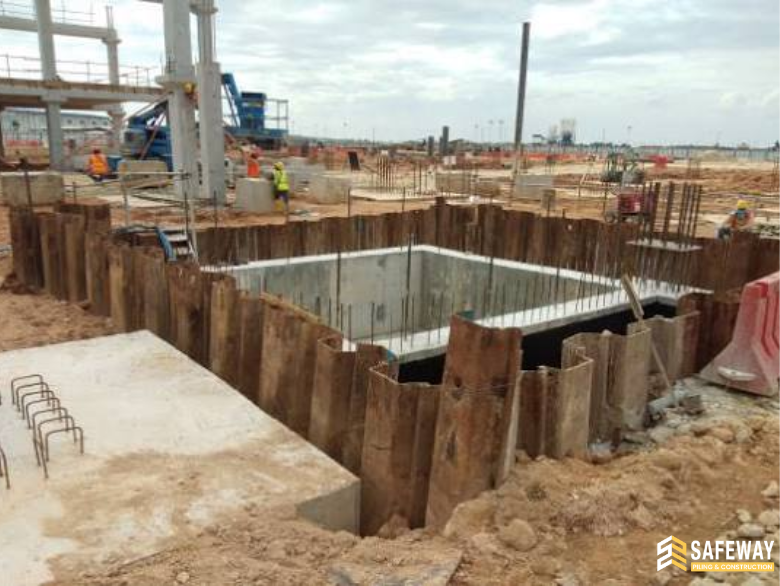
Contact Safeway Piling & Construction
Need professional sheet pile driving in hard soil support for your construction project?
Contact Safeway Piling & Construction to discuss your sheet pile requirements, soil conditions, driving method, equipment needs, and project requirements.
Call: 01841980452
Website: https://safewaypiling.com/
Safeway Piling & Construction provides sheet pile supply and driven services in Bangladesh for excavation support, retaining walls, cofferdams, basement construction, riverbank protection, and other construction applications.
Conclusion
Sheet pile driving in hard soil requires suitable equipment, proper planning, trained workers, and careful control throughout the installation process. Dense sand, stiff clay, gravel, compacted fill, mixed soil, and hard layers can increase driving resistance and make installation more difficult.
Contractors can use vibratory hammers, impact hammers, hydraulic pressing systems, pre-augering, or combined methods according to project conditions. The correct method depends on soil resistance, pile profile, pile length, installation depth, site access, and nearby structures. Proper equipment selection, controlled driving, alignment checks, pile inspection, and continuous monitoring can improve installation performance. Contractors should also consider vibration, noise, equipment loads, and worker safety throughout the project.
Safeway Piling & Construction provides professional sheet pile supply and project support for different construction applications. We help clients understand their sheet pile requirements and plan suitable solutions based on project conditions and construction needs.
Frequently Asked Questions
- What is sheet pile driving in hard soil?
Sheet pile driving in hard soil is the process of installing steel sheet piles into dense, stiff, or highly resistant ground. Contractors may use vibratory hammers, impact hammers, hydraulic systems, or pre-augering to achieve the required penetration.
- What equipment is used for sheet pile driving in hard soil?
Common equipment includes vibratory hammers, impact hammers, cranes, pile clamps, guide frames, hydraulic pressing systems, and pre-augering equipment. The correct equipment depends on soil conditions and project requirements.
- Can sheet piles be driven through dense sand?
Yes. Contractors can drive sheet piles through dense sand using suitable equipment and an appropriate installation method. High-capacity vibratory or impact equipment may be required depending on the resistance.
- Can sheet piles be installed in stiff clay?
Yes. Sheet piles can be installed in stiff clay when contractors use suitable driving equipment and control the installation process. Stiff clay can create high resistance, so equipment selection is important.
- What happens if a sheet pile cannot reach the required depth?
Contractors should review the soil conditions, driving resistance, pile alignment, and equipment performance. The approved method may allow pre-augering, changing the hammer, adjusting the driving approach, or using another suitable technique.
- Can vibratory hammers drive sheet piles in hard soil?
Vibratory hammers can drive sheet piles in many hard or dense soil conditions when the hammer has sufficient capacity. Extremely resistant layers may require impact driving, pre-augering, or another method.
- Can hard soil damage sheet piles?
Yes. Excessive driving force can bend the pile, damage the interlocks, or deform the pile section. Contractors should use suitable equipment and controlled driving energy.
- Why does sheet pile alignment change during hard-soil driving?
High and uneven soil resistance can push the pile away from its planned position. Guide frames and regular alignment checks can help control this problem.
- Does sheet pile driving create vibration?
Yes. Vibratory and impact driving methods can create ground vibration. Contractors should consider nearby buildings, roads, utilities, and sensitive structures before selecting the driving method.
- Can Safeway Piling & Construction support sheet pile projects?
Yes. Safeway Piling & Construction supports sheet pile supply and project requirements for excavation support, retaining walls, cofferdams, basement construction, marine works, riverbank protection, and other construction applications.