
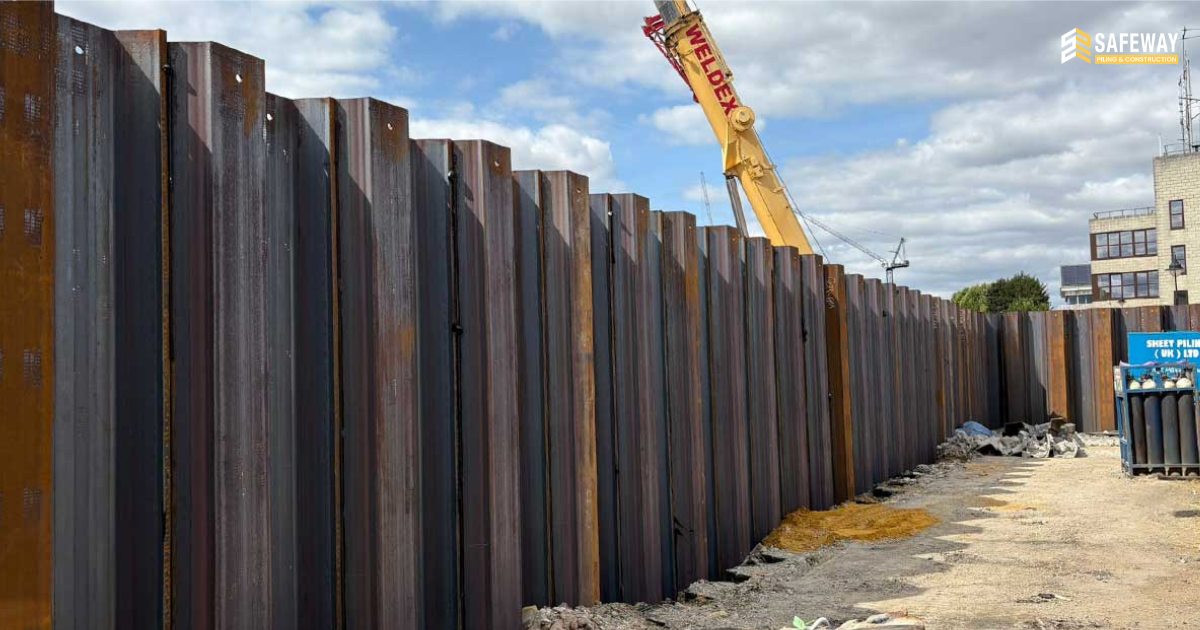
Sheet pile sizes vary based on width, height, thickness, length, weight, and structural properties. Choosing the right size helps contractors create strong and stable retaining walls, excavation support systems, cofferdams, riverbank protection, basement support, and other structures.
Steel sheet piles come in different profiles and dimensions. Contractors select the appropriate size according to soil conditions, excavation depth, water pressure, required embedment, loading conditions, site space, and project design.
Safeway Piling & Constructions provides sheet pile solutions for construction projects in Bangladesh. The company can support clients with sheet pile requirements based on project conditions and construction needs.
What Are Sheet Pile Sizes?
Sheet pile sizes describe the main physical and structural dimensions of a sheet pile. These include width, height, thickness, length, weight per meter, section modulus, and moment of inertia. These measurements help engineers and contractors compare different sheet pile sections and select a suitable option for a specific project.
Different manufacturers produce different sheet pile profiles and specifications. Therefore, contractors should always check the manufacturer’s technical data before selecting a particular sheet pile size.
Why Are Sheet Pile Sizes Important?
Selecting the correct sheet pile size helps the wall perform according to the project requirements. A suitable size can provide the required strength, stiffness, and embedment for the application.
Benefits include:
- Suitable Structural Strength: The right section can provide the required resistance against lateral loads.
- Better Stability: Proper dimensions help the sheet pile wall maintain stability.
- Efficient Installation: Suitable pile dimensions make handling and installation easier.
- Material Control: Correct sizing helps avoid unnecessary use of steel.
- Better Project Planning: Size and weight information helps contractors plan transportation and lifting.
- Application Flexibility: Different sizes can serve retaining walls, cofferdams, excavations, and other projects.
Main Dimensions of Sheet Piles
Several measurements determine the size and performance of a sheet pile.
- Sheet Pile Width: Width represents the effective horizontal coverage of the sheet pile. Wider sheet piles can cover more wall area with fewer individual piles. However, engineers should consider the complete section properties instead of selecting a pile based only on width.
- Sheet Pile Height: Height represents the depth of the sheet pile profile. A deeper profile can provide greater stiffness depending on its design and structural properties.
- Sheet Pile Thickness: Thickness indicates the thickness of the steel used in the sheet pile section. It affects the pile’s weight and structural properties. Thicker sections generally contain more steel and can increase the overall weight of the pile.
- Sheet Pile Length: Length determines how deep the pile can extend into the ground. Contractors select pile length according to the required exposed wall height and embedment depth.
- Sheet Pile Weight: Weight is usually measured in kilograms per meter. It helps contractors estimate transportation, handling, lifting, and installation requirements.
- Section Modulus: Section modulus helps engineers evaluate the bending capacity of a sheet pile section. Engineers consider this property when selecting piles for retaining and excavation support applications.
Sheet Pile Sizes Chart
The exact dimensions depend on the manufacturer and profile. A typical sheet pile size chart may include:
| Sheet Pile Dimension | Common Consideration |
| Width | 400 mm, 500 mm, 600 mm and wider sections |
| Height | Depends on the sheet pile profile |
| Thickness | Selected according to structural requirements |
| Length | Depends on wall height and required embedment |
| Weight | Measured in kg/m |
| Section Modulus | Used for structural design |
| Moment of Inertia | Used to evaluate section stiffness |
These values provide general sizing guidance. Engineers should use the manufacturer’s technical specification and project calculations for final selection.
Types of Sheet Pile Sizes
Different sheet pile profiles offer different dimensions and structural properties.
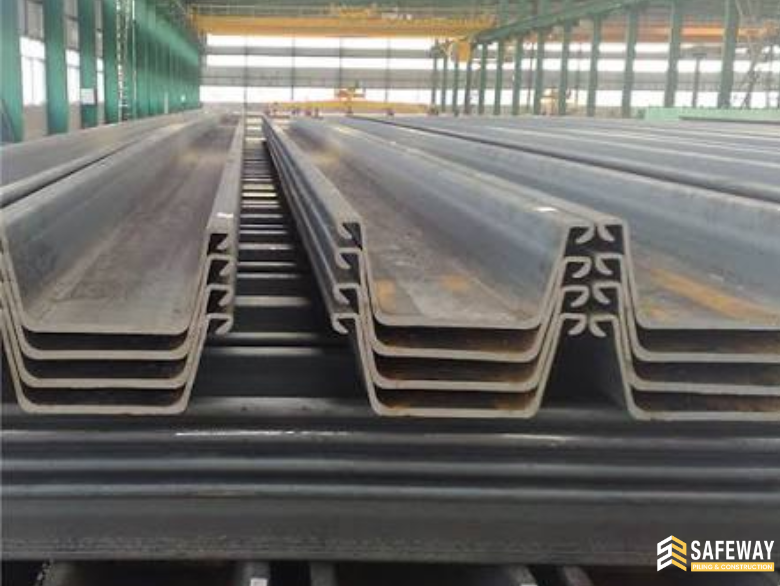
U-Type Sheet Piles: U-type sheet piles have a U-shaped profile and are commonly used for retaining walls, excavation support, cofferdams, and other construction applications. They are available in different widths, heights, thicknesses, and weights to meet different project requirements.
Z-Type Sheet Piles: Z-type sheet piles have a Z-shaped profile and provide efficient structural performance. Contractors use them for retaining walls, marine structures, flood protection, and other applications.
HAT-Type Sheet Piles: HAT-type sheet piles have a wider profile and can provide high wall coverage. Contractors can use them for large retaining walls and other projects that require suitable structural performance.
Straight Web Sheet Piles: Straight web sheet piles have a relatively flat profile. Contractors use them for specific structural applications where the project design requires this type of section.
Factors That Affect Sheet Pile Size Selection
Several factors affect the selection of sheet pile sizes.
- Excavation Depth: Deeper excavations can create greater lateral soil pressure. Engineers may require sheet piles with greater structural capacity and suitable embedment.
- Soil Conditions: Clay, sand, gravel, and mixed soil create different loading and installation conditions. Site investigation helps determine suitable pile requirements.
- Water Pressure: Water pressure can significantly affect sheet pile walls used near rivers, canals, and other water bodies. Engineers should consider groundwater and water levels during design.
- Required Embedment: The pile must extend sufficiently into the ground to provide the required resistance. Engineers determine embedment according to soil conditions and structural requirements.
- Loading Conditions: Buildings, roads, construction equipment, stored materials, and other nearby loads can increase pressure on the sheet pile wall.
- Site Access: Limited space can affect pile dimensions, crane positioning, pile storage, and installation equipment.
- Installation Equipment: The selected sheet pile should be suitable for the available crane and driving equipment.
- Project Design: The final size should match the structural calculations, wall arrangement, support system, and project requirements.
How to Choose the Right Sheet Pile Size
Choosing the correct sheet pile size requires careful consideration of project conditions.
- Inspect the Site: Review soil conditions, groundwater, nearby structures, access, and other site factors.
- Determine Excavation Depth: Identify the required excavation depth and exposed wall height.
- Calculate Required Embedment: Engineers determine how deeply the sheet piles need to penetrate the ground.
- Check Structural Loads: Evaluate soil pressure, water pressure, surcharge loads, and other forces.
- Compare Sheet Pile Profiles: Compare width, height, thickness, section modulus, weight, and other properties.
- Select the Suitable Profile: Choose the sheet pile section that meets the project’s structural requirements.
- Check Installation Requirements: Make sure the selected pile works with the available installation equipment.
- Confirm Manufacturer Specifications: Verify the final dimensions and structural properties using the manufacturer’s technical data.
Applications of Different Sheet Pile Sizes
Different sheet pile sizes can support various construction applications.
Retaining Wall Construction: Sheet piles create continuous walls that retain soil and provide lateral support.
Basement Construction: Contractors use sheet pile walls to support deep excavation for basement construction.
Cofferdam Construction: Sheet piles can form temporary enclosures around construction areas in rivers, canals, and other water environments.
Bridge Construction: Contractors use sheet piles around bridge foundations and piers to create controlled working areas.
Riverbank Protection: Sheet pile walls can support riverbanks and help control soil movement.
Marine Construction: Sheet piles can support waterfront structures, docks, marine foundations, and other water-related construction.
Industrial Construction: Contractors can use sheet pile walls to support excavation and foundation work for industrial projects.
Sheet Pile Size and Weight
Sheet pile weight plays an important role in project planning. Heavier sheet piles require suitable cranes, lifting accessories, transportation, and installation equipment.
Weight also affects material calculations and handling requirements.
Contractors should therefore consider both structural performance and practical handling requirements when selecting sheet pile sizes.
Challenges of Selecting Sheet Pile Sizes
Choosing an unsuitable size can create problems during construction.
- Insufficient Strength: A section with inadequate structural capacity may not meet project requirements.
- Excessive Weight: Very heavy sections can increase transportation and lifting requirements.
- Installation Difficulty: Large or heavy piles may require more powerful equipment.
- Incorrect Length: Short piles may not provide the required embedment.
- Poor Profile Selection: An unsuitable profile may not provide the required stiffness.
- Higher Project Cost: Oversized piles can increase material and handling costs.
Proper engineering assessment helps reduce these problems.
Best Practices for Selecting Sheet Pile Sizes
Following proper practices can improve sheet pile selection.
- Conduct a Site Investigation: Understand soil, groundwater, and surrounding conditions.
- Follow Structural Design: Select sheet piles based on engineering calculations.
- Check Section Properties: Review section modulus, moment of inertia, thickness, and weight.
- Consider Installation: Make sure available equipment can handle the selected piles.
- Check Wall Alignment: Plan the sheet pile arrangement before installation.
- Consider Nearby Structures: Select an appropriate installation method where vibration or noise may create concerns.
- Confirm Technical Data: Use reliable manufacturer specifications before ordering materials.
Safety Considerations During Sheet Pile Handling
Handling sheet piles requires proper safety controls because the piles are heavy and long.
Safety measures include:
- Inspect cranes before lifting.
- Check lifting slings and shackles.
- Use suitable lifting accessories.
- Use trained crane and piling operators.
- Keep workers away from suspended loads.
- Prepare stable ground for crane operation.
- Control pile movement during lifting.
- Maintain safe access around the work area.
- Store sheet piles securely.
- Use appropriate personal protective equipment.
How Safeway Piling & Constructions Supports Sheet Pile Projects
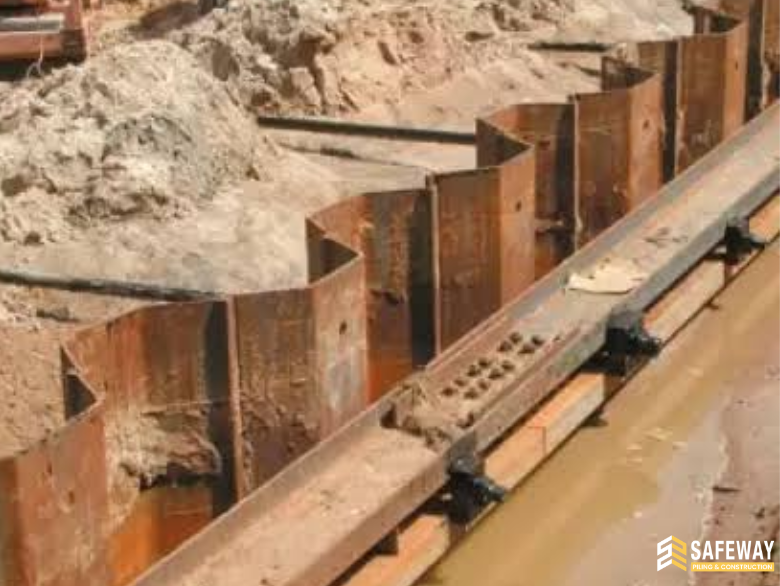
Safeway Piling & Constructions provides sheet pile solutions for construction projects in Bangladesh. The company supports sheet pile requirements for different construction applications.
Sheet Pile Supply: Safeway Piling & Constructions can provide sheet pile supply according to project requirements.
Project-Based Support: Every project has different soil conditions, excavation depths, structural requirements, and site restrictions. The company can support clients according to their specific project needs.
Sheet Pile Installation: The company provides piling-related services for construction projects and can support sheet pile installation requirements.
Construction Applications: Safeway Piling & Constructions supports sheet pile requirements for retaining walls, excavation support, cofferdams, riverbank protection, marine works, and other applications.
Benefits of Choosing Safeway Piling & Constructions
Selecting a suitable sheet pile company can help construction teams manage their project requirements effectively.
Reliable Sheet Pile Solutions: Safeway Piling & Constructions provides sheet pile solutions for construction and infrastructure projects.
Project-Focused Support: The company considers project conditions when supporting sheet pile requirements.
Professional Service: Proper communication helps clients understand sheet pile sizes, material requirements, installation methods, and project needs.
Multiple Applications: Safeway Piling & Constructions supports sheet pile requirements for retaining walls, cofferdams, excavation support, bridge projects, riverbank protection, marine construction, and other applications.
Contact Safeway Piling & Constructions
Need reliable sheet pile sizes and professional sheet pile solutions for your construction project?
Contact Safeway Piling & Constructions to discuss your sheet pile requirements, dimensions, quantity, project application, installation method, and site conditions.
Conclusion
Understanding sheet pile sizes helps engineers, contractors, and project owners select suitable sheet piles for different construction applications. Width, height, thickness, length, weight, section modulus, and other properties all influence sheet pile selection.
U-type, Z-type, HAT-type, and straight web sheet piles provide different structural characteristics. The right size depends on excavation depth, soil conditions, water pressure, loading, embedment, site access, and installation requirements.
Engineers should always confirm the final sheet pile size through proper structural design and manufacturer specifications. Safeway Piling & Constructions provides sheet pile solutions and piling-related support for construction projects in Bangladesh.
Frequently Asked Questions
1. What are sheet pile sizes?
Sheet pile sizes describe the dimensions and structural properties of a sheet pile, including width, height, thickness, length, weight, section modulus, and moment of inertia.
2. What is the standard size of a sheet pile?
There is no single standard size for all sheet piles. Different profiles and manufacturers offer different widths, heights, thicknesses, and lengths.
3. What affects sheet pile size selection?
Excavation depth, soil conditions, water pressure, loading conditions, required embedment, site access, structural requirements, and installation equipment affect sheet pile size selection.
4. Does sheet pile thickness affect weight?
Yes. Greater thickness generally increases the amount of steel used and therefore increases the weight of the sheet pile.
5. How long can sheet piles be?
Sheet pile length varies according to the manufacturer, profile, project requirements, and required embedment. Engineers should determine the required length for each project.
6. Which sheet pile profile is best?
No single profile works best for every project. Engineers should select the profile based on structural requirements, soil conditions, installation requirements, and project design.
7. Why is sheet pile weight important?
Weight affects transportation, storage, crane capacity, lifting equipment, and installation requirements.