
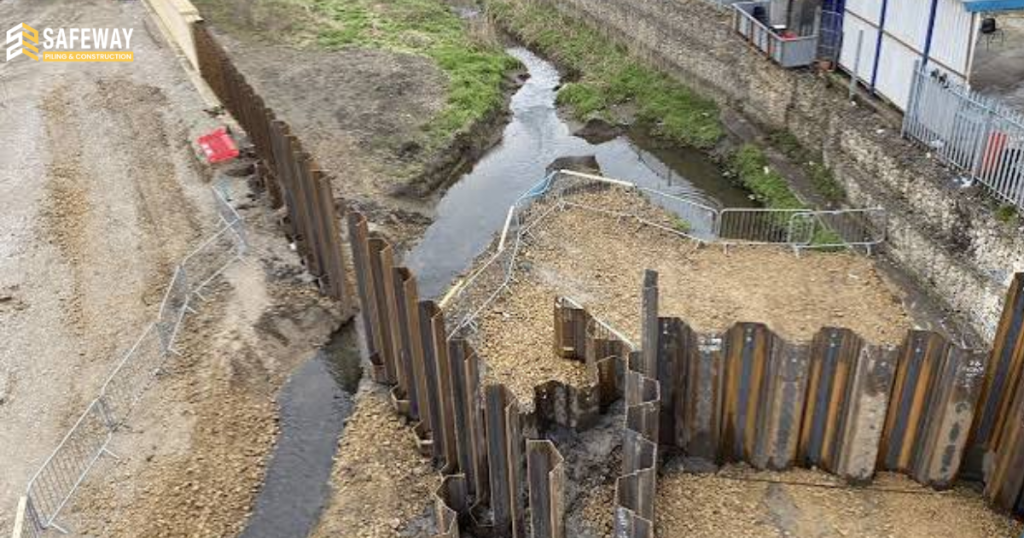
Sheet pile length calculation is an important part of planning and designing sheet pile walls. The required sheet pile length depends on several factors, including excavation depth, required embedment depth, soil condition, groundwater level, surcharge loads, sheet pile type, wall stability, and project requirements. There is no single sheet pile length that is suitable for every construction project.
Sheet piles are commonly used for excavation support, retaining walls, basement construction, cofferdams, riverbank protection, bridge projects, waterfront construction, and other civil engineering applications. The piles must be driven to a suitable depth to provide the required stability and resistance against soil and water pressure.
Safeway Piling & Construction provides sheet pile supply and driven services in Bangladesh. The company works with engineers, operators, coordinators, and project teams to provide sheet pile solutions according to project requirements.
What Is Sheet Pile Length Calculation?
Sheet pile length calculation is the process of determining the total length of sheet pile required for a construction project. It considers the exposed or retained height of the wall together with the required embedment depth below the excavation or ground level.
A simplified calculation can be represented as
Required Sheet Pile Length = Retained Height + Required Embedment Depth
However, actual sheet pile design is more complex. The required embedment must be checked according to soil resistance, earth pressure, groundwater, surcharge loads, wall stability, and structural requirements. The final sheet pile length should be determined by a qualified engineer based on the project’s soil investigation, design requirements, and site conditions.
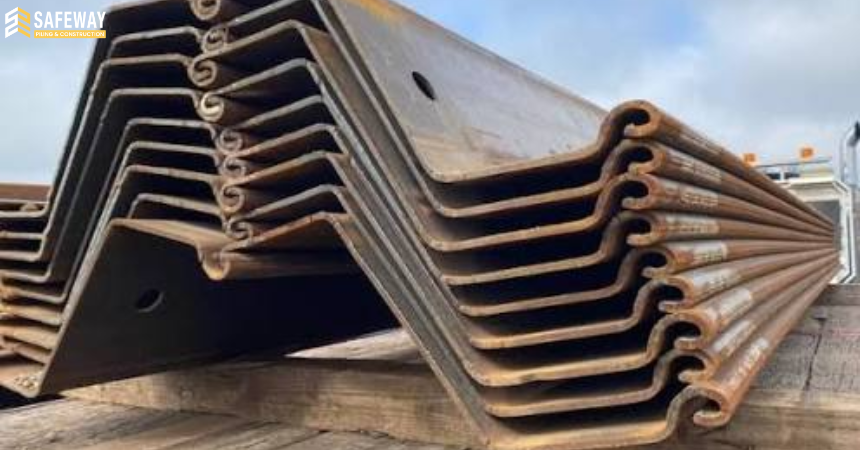
How Deep Should Sheet Piles Be Driven?
There is no universal driving depth that applies to every sheet pile project. The required depth depends on excavation depth, soil condition, groundwater, surcharge loads, wall type, and the required stability of the structure.
For example, a shallow excavation in strong soil may require a different embedment depth compared with a deep excavation in weak soil with high groundwater and nearby structures. The sheet pile length can be considered in two main parts:
- Exposed or Retained Height: This is the portion of the sheet pile that supports soil or water above the excavation level.
- Embedment Depth: This is the portion driven below the excavation level to provide resistance and stability.
The actual embedment should be determined through engineering calculations rather than by using a fixed rule of thumb.
Main Factors That Affect Sheet Pile Length Include:
Excavation Depth: Deeper excavations generally require longer sheet piles because the wall must retain a greater height of soil.
Soil Condition: Soil type, density, strength, and underground layers can significantly affect the required embedment depth.
Groundwater Level: High groundwater can create additional water pressure on the wall and influence the sheet pile design.
Surcharge Loads: Buildings, vehicles, equipment, and stored materials near the excavation can increase lateral pressure.
Sheet Pile Section: The profile, thickness, steel grade, and stiffness of the sheet pile affect its structural capacity.
Wall Height: A higher retaining wall may require greater structural capacity and suitable embedment to remain stable.
Anchoring System: Anchored or braced sheet pile walls may have different embedment requirements compared with cantilever walls.
Site Conditions: Nearby buildings, underground utilities, roads, property boundaries, and restricted access can affect the sheet pile design and installation.
Why Is Sheet Pile Embedment Depth Important?
Sheet pile embedment depth is the portion of the pile installed below the excavation level or retained ground level. Proper embedment provides resistance against the forces acting on the sheet pile wall.
Key Reasons Include:
- Lateral Soil Pressure: Adequate embedment helps the sheet pile resist pressure from retained soil.
- Ground Movement: Proper depth can help control soil movement around the excavation.
- Water Pressure: Sufficient embedment can contribute to the stability of walls exposed to groundwater.
- Wall Stability: Embedment provides resistance against sliding and overturning forces.
- Structural Performance: Correct depth helps the wall perform according to the engineering design.
If the sheet pile is not driven deep enough, the wall may not provide the required stability. Excessive embedment can also increase material and installation costs.
How to Calculate Sheet Pile Length?
A proper sheet pile length calculation starts with the project design, soil investigation, and site conditions.
Follow These Steps:
- Review the Project Design: Check the excavation depth, wall height, loading conditions, and required support system.
- Determine Excavation Depth: Identify the final excavation level and the height of soil that must be retained.
- Study Soil Conditions: Review the soil investigation report to understand soil layers, density, strength, and groundwater.
- Determine Earth Pressure: Calculate the lateral earth pressure acting on the sheet pile wall.
- Check Groundwater: Determine the groundwater level and assess the water pressure acting on the wall.
- Consider Surcharge Loads: Include nearby buildings, roads, vehicles, equipment, and stored materials.
- Calculate Required Embedment: Determine the depth below the excavation level required to provide adequate resistance.
- Select the Sheet Pile Section: Choose a suitable profile, thickness, steel grade, and section according to design requirements.
- Calculate Total Length: Add the required retained height and embedment depth to determine the basic pile length.
- Check Installation Requirements: Consider driving equipment, pile handling, access, and practical installation conditions.
- Verify Structural Capacity: Check bending, shear, stability, and other structural requirements.
- Finalize the Design: The final sheet pile length should be reviewed and approved by the responsible engineer.
Example of Sheet Pile Length Calculation
Consider a project where a sheet pile wall is required for a 5-meter-deep excavation.
If engineering calculations determine that the required embedment below the excavation level is 4 meters, the basic length can be calculated as
Excavation Depth = 5 meters
Required Embedment = 4 meters
Total Sheet Pile Length = 5 + 4 = 9 meters
Therefore, a preliminary sheet pile length of approximately 9 meters would be considered.
However, this is only a simplified example. Actual sheet pile length should be determined based on soil conditions, groundwater, surcharge loads, wall configuration, structural capacity, and project requirements.
What Is the Minimum Sheet Pile Embedment Depth?
There is no single minimum embedment depth that is suitable for every sheet pile project. The required depth depends on the wall type, soil condition, excavation depth, groundwater, and loading conditions.
Important Design Checks Include:
- Passive Earth Pressure: Determines the resistance provided by soil in front of the embedded portion.
- Active Earth Pressure: Considers the pressure exerted by retained soil behind the wall.
- Sliding Stability: Checks whether the wall has sufficient resistance against horizontal movement.
- Overturning Stability: Checks whether the wall can resist rotational forces.
- Bending Moment: Determines the structural demand on the sheet pile section.
- Water Pressure: Considers groundwater and hydraulic forces acting on the wall.
- Surcharge Loads: Includes additional loads near the sheet pile wall.
- Overall Stability: Considers the stability of the complete soil and wall system.
For this reason, sheet pile embedment should be calculated for the specific project rather than selected using a fixed minimum value.
Sheet Pile Length for Deep Excavation
Deep excavation projects require careful sheet pile length calculation because greater excavation depths can produce higher lateral soil and water pressures.
Important Factors Include:
- Excavation Depth: Greater depth generally requires greater retaining capacity.
- Soil Layering: Different soil layers can provide different levels of resistance.
- Groundwater: High groundwater can increase pressure on the sheet pile wall.
- Nearby Buildings: Adjacent structures can create additional surcharge loads.
- Road Traffic: Vehicle loads near the excavation can affect lateral pressure.
- Support System: Anchors or internal bracing may be required depending on the design.
- Ground Movement: Controlling movement can be particularly important in urban areas.
Safeway Piling & Construction provides sheet pile supply and driven services in Bangladesh for projects requiring excavation support and soil retention.
Sheet Pile Length for Basement Construction
Basement construction commonly requires sheet piles to retain surrounding soil while excavation is carried out.
Main Considerations Include:
- Basement Depth: The required excavation depth influences the total pile length.
- Groundwater: Water conditions can affect wall pressure and stability.
- Adjacent Buildings: Nearby structures may require careful control of soil movement.
- Property Boundaries: Restricted space can affect wall positioning and pile installation.
- Surcharge Loads: Roads, vehicles, and buildings can increase pressure on the wall.
- Support Arrangement: Anchors or bracing may change the required sheet pile configuration.
Sheet Pile Length for Cofferdams
Cofferdams use sheet piles to create an enclosed work area in or near water. The required pile length depends on water depth, excavation depth, soil conditions, and hydraulic conditions.
Important Factors Include:
- Water Depth: Deeper water can increase the required wall height.
- Water Pressure: Hydraulic pressure must be considered in the design.
- Riverbed Condition: Soil and sediment conditions affect pile embedment.
- Excavation Depth: Deeper internal excavation may require additional embedment.
- Current Conditions: Water flow can influence the stability and construction method.
- Internal Bracing: Bracing can affect the overall cofferdam design.
Sheet Pile Length for Riverbank Protection
Sheet piles used for riverbank protection must be designed according to the river, soil, and erosion conditions.
Main Factors Include:
- River Water Level: Changes in water level can affect pressure on the sheet pile.
- Riverbed Conditions: The soil below the riverbed affects pile resistance.
- Bank Height: Higher riverbanks may require longer piles.
- Erosion: Expected erosion and scour should be considered.
- Water Flow: Flow conditions can affect the stability of the riverbank.
- Required Embedment: Adequate depth helps maintain the stability of the protection system.
What Factors Affect Sheet Pile Driving Depth?
Several factors determine how deep sheet piles need to be driven.
- Soil Type: Sand, clay, silt, gravel, fill, and layered soils can provide different levels of resistance during driving and in service.
- Soil Strength: The strength and density of the soil affect both pile driving resistance and the required embedment for stability.
- Excavation Depth: A deeper excavation generally requires the sheet pile wall to retain a greater height of soil.
- Groundwater: Groundwater can increase water pressure and affect the overall stability requirements of the sheet pile wall.
- Surcharge Loads: Buildings, vehicles, construction equipment, and stored materials near the wall can increase lateral pressure.
- Nearby Structures: Adjacent structures may require greater attention to wall movement and excavation stability.
- Wall Type: Cantilever, anchored, and braced sheet pile walls can have different embedment requirements.
- Sheet Pile Profile: The stiffness and structural properties of the selected sheet pile section affect its ability to resist design loads.
- Installation Method: Vibratory hammers, impact hammers, and other methods have different capabilities depending on the soil and pile characteristics.
- Temporary or Permanent Application: Temporary sheet pile walls and permanent retaining structures may have different design and installation requirements.
What Is Included in Sheet Pile Length Planning?
Proper sheet pile length planning should consider both design and construction requirements.
Main Planning Items Include:
- Sheet Pile Length: Determines the total steel material required for the project.
- Embedment Depth: Provides the required resistance below the excavation level.
- Pile Quantity: Determines how many sheet pile sections are required for the wall length.
- Sheet Pile Section: Defines the profile and structural properties of the pile.
- Driving Equipment: Determines how the selected piles can be installed.
- Transportation: Considers delivery of piles and equipment to the project site.
- Site Access: Determines whether cranes, piling rigs, and trucks can reach the working area.
- Installation Sequence: Helps organize efficient and safe pile installation.
How Can You Reduce Unnecessary Sheet Pile Length Costs?
Reducing cost does not mean using shorter piles than the design requires. The objective is to select an appropriate pile length based on engineering requirements.
Consider These Factors:
- Conduct Proper Soil Investigation: Good soil information helps determine a suitable embedment depth.
- Determine Actual Excavation Depth: Accurate excavation levels prevent unnecessary overestimation of pile length.
- Select the Right Sheet Pile: Choose a suitable profile and thickness according to structural requirements.
- Optimize Embedment: Engineering calculations can help avoid unnecessary pile depth while maintaining stability.
- Review Groundwater: Understanding groundwater conditions helps improve wall and embedment planning.
- Plan Installation Equipment: Suitable equipment can reduce driving time and equipment operating costs.
- Consider Nearby Loads: Buildings, roads, vehicles, and equipment should be included in the design.
- Plan Transportation: Proper planning can reduce unnecessary transportation and handling expenses.
- Monitor Installation: Checking pile depth, alignment, and verticality helps reduce installation problems.
- Coordinate Design and Construction: Good communication between engineers and the piling contractor can reduce changes and delays.
How Is Sheet Pile Length Supported by Safeway Piling & Construction?
Safeway Piling & Construction provides sheet pile supply and driven services in Bangladesh. The company works with engineers, operators, coordinators, and project teams to support piling and construction requirements.
For sheet pile projects, important information such as excavation depth, wall length, required pile length, soil condition, driving depth, quantity, and site location should be reviewed before installation.
Safeway Piling & Construction can support projects where sheet piles are required for excavation support, retaining structures, cofferdams, and other construction applications.
For an accurate sheet pile requirement, project-specific engineering and site information should be reviewed before finalizing the pile length and installation method.
Benefits of Proper Sheet Pile Length Calculation
Correct sheet pile length calculation can improve project planning, structural performance, and installation efficiency.
Key Benefits Include:
- Improved Excavation Stability: Proper pile length helps support excavation sides and control soil movement.
- Better Soil Retention: Adequate embedment helps resist lateral pressure from retained soil.
- Reduced Unnecessary Costs: Accurate calculations can prevent excessive material and installation expenses.
- Better Equipment Planning: Knowing the required length helps contractors select suitable piling equipment.
- Improved Construction Safety: Properly designed sheet pile walls can provide safer excavation conditions.
- Efficient Project Planning: Accurate calculations help plan materials, transportation, labor, and installation time.
- Better Groundwater Management: Appropriate wall depth can support the overall excavation and water-control strategy.
- Suitable Structural Performance: Correct design helps the sheet pile section perform according to project requirements.
Safety During Sheet Pile Driving
Sheet pile driving involves heavy steel sections, cranes, piling hammers, lifting operations, and ground-related risks. Proper safety planning is required before starting installation.
Important Safety Measures Include:
- Inspect Sheet Piles: Check piles for visible damage or defects before installation.
- Check Lifting Equipment: Inspect cranes, lifting points, slings, and rigging before handling piles.
- Establish a Safe Zone: Keep unauthorized workers away from active piling operations.
- Check Underground Utilities: Identify underground services before pile driving begins.
- Review Nearby Structures: Check surrounding buildings and structures before installation.
- Use Trained Operators: Qualified operators should operate cranes and piling equipment.
- Monitor Equipment: Check piling equipment during operation for abnormal conditions.
- Check Pile Alignment: Monitor pile position and verticality during installation.
- Follow Installation Sequence: Use the approved driving sequence to reduce construction problems.
- Monitor Ground Movement: Observe surrounding ground and structures where movement could affect safety.
- Control Suspended Loads: Keep workers away from suspended sheet piles during lifting.
- Stop Unsafe Work: Stop installation when dangerous site conditions or equipment problems occur.
Safeway Piling & Construction identifies safety and security as important considerations in its piling services and works with project teams to manage piling and construction activities.
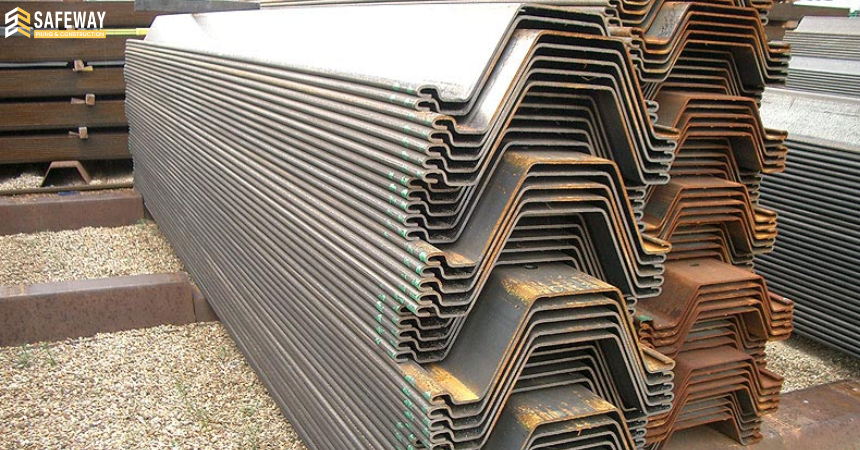
Why Choose Safeway Piling & Construction for Sheet Pile Driving?
Safeway Piling & Construction provides sheet pile supply and driven services in Bangladesh. The company describes its team as including engineers, operators, coordinators, and project managers and states that it uses modern technology for piling and construction work.
Key Reasons to Consider Safeway Piling & Construction Include:
- Sheet Pile Supply Services: The company provides sheet pile supply according to project requirements.
- Sheet Pile Driven Services: Safeway supports projects requiring sheet pile installation and driving.
- Engineering Support: Engineering and project teams can help coordinate sheet pile requirements.
- Skilled Operators: Experienced operators are involved in piling equipment operation.
- Modern Piling Technology: Suitable piling technology and equipment can be selected according to project conditions.
- Project Coordination: Project teams can coordinate material, equipment, labor, and installation activities.
- Safety-Focused Work: Safety planning is an important part of piling and construction operations.
- Support for Different Projects: Sheet piles can be used for excavation, retaining, cofferdam, and other construction requirements.
- Piling Services Across Bangladesh: Safeway Piling & Construction provides piling-related services for projects in Bangladesh.
- Project-Based Solutions: Sheet pile requirements can be reviewed according to the specific conditions of each project.
Contact Safeway Piling & Construction for Sheet Pile Length and Driving Solutions
Sheet pile length depends on excavation depth, required embedment, soil condition, groundwater, surcharge loads, sheet pile section, wall type, and project requirements.
A proper engineering assessment should be completed before selecting the final sheet pile length. Material quantity, transportation, driving equipment, labor, and installation conditions should also be considered when preparing the project budget.
Safeway Piling & Construction provides sheet pile supply and driven services in Bangladesh. You can contact the company with your project details to discuss sheet pile length, required driving depth, equipment, installation conditions, and quotation.
For sheet pile driving services and project consultation, contact Safeway Piling & Construction at 01841980452 or info@safewaypiling.com.
Conclusion
Sheet pile length calculation is an important part of planning excavation support, retaining walls, cofferdams, riverbank protection, basement construction, and other sheet pile applications.
The required sheet pile length generally consists of the retained or excavation height plus the required embedment depth. However, the embedment cannot be selected using a single fixed rule because soil condition, groundwater, surcharge loads, wall configuration, sheet pile section, and project requirements can significantly affect the design.
A proper sheet pile length calculation should consider geotechnical conditions, earth pressure, water pressure, structural capacity, stability, installation requirements, and site conditions.
Safeway Piling & Construction provides sheet pile supply and driven services in Bangladesh. Proper planning, suitable sheet pile selection, engineering design, and appropriate installation equipment can help provide effective sheet pile solutions for construction projects.
Frequently Asked Questions
1. What is Sheet Pile Length Calculation?
Sheet pile length calculation is the process of determining the total sheet pile length required for a particular project based on retained height, embedment, soil conditions, and design requirements.
2. How Deep Should Sheet Piles Be Driven?
There is no single driving depth for every project. The required depth depends on excavation depth, soil condition, groundwater, surcharge loads, wall type, and engineering design.
3. What Is the Basic Formula for Sheet Pile Length?
A simplified formula is:
Total Sheet Pile Length = Retained Height + Required Embedment Depth
The actual embedment should be determined through project-specific engineering calculations.
4. Does Excavation Depth Affect Sheet Pile Length?
Yes. Deeper excavations generally require longer sheet piles because the wall must retain a greater height of soil and provide sufficient embedment.
5. Does Soil Condition Affect Sheet Pile Embedment?
Yes. Soil type, strength, density, layering, and underground obstructions can affect both the required embedment and the difficulty of pile installation.
6. Does Groundwater Affect Sheet Pile Length?
Yes. Groundwater can create additional water pressure on the wall and may affect the required design and embedment depth.
7. Can Sheet Piles Be Used for Deep Excavation?
Yes. Sheet piles are commonly used for deep excavation support. The pile section, length, embedment, and support system should be selected according to project conditions.
8. Can Sheet Piles Be Driven Deeper Than Required?
Yes, but unnecessary additional depth can increase material, equipment, labor, and installation costs. The required depth should be optimized through engineering design.
9. What Information Is Required to Calculate Sheet Pile Length?
Important information includes excavation depth, wall length, soil investigation data, groundwater level, surcharge loads, nearby structures, sheet pile section, support system, and project location.
10. What Equipment Is Used for Sheet Pile Driving?
Depending on the project, contractors may use vibratory hammers, impact hammers, cranes, and supporting equipment. Equipment selection depends on pile size, soil conditions, and required driving depth.
11. Does Safeway Piling & Construction Provide Sheet Pile Driving?
Yes. Safeway Piling & Construction provides sheet pile supply and driven services in Bangladesh for construction and piling requirements.
12. How Can I Get a Sheet Pile Length and Driving Quotation?
Provide the project location, excavation depth, wall length, required sheet pile application, soil information, quantity, and available project drawings or reports to Safeway Piling & Construction for discussion and quotation.
This version is ready to use as a long-form SEO article, with the bullet/numbered sections expanded into short, clear explanations rather than just listing headings.