
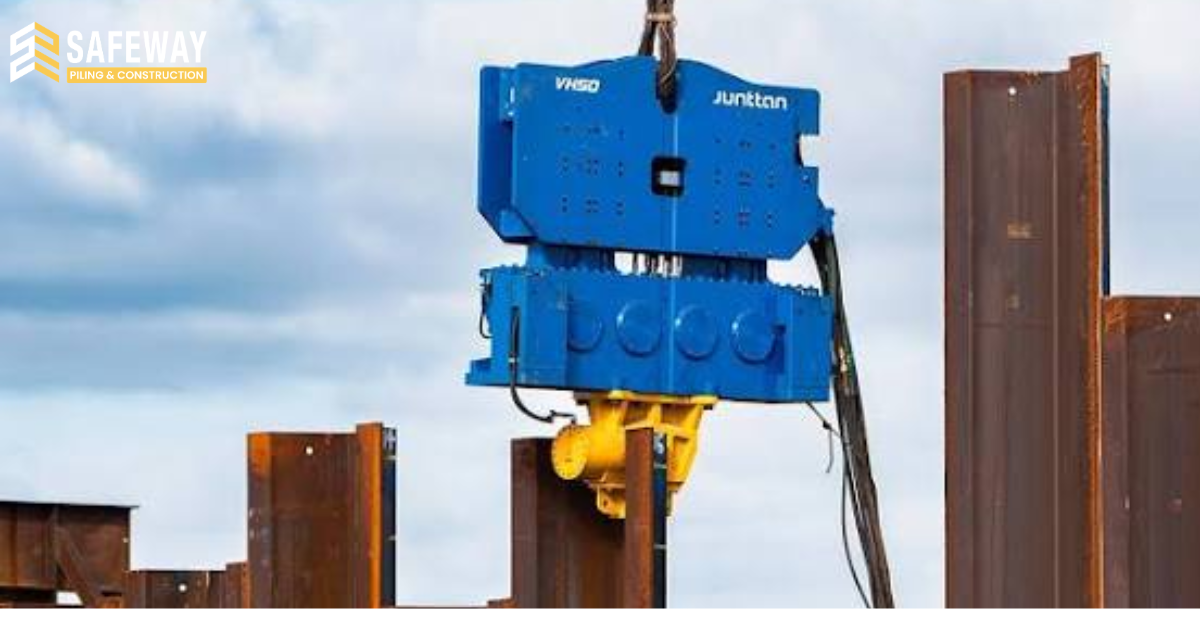
Understanding How a Vibratory Hammer Works helps engineers and contractors choose the right machine for steel sheet pile installation. Sheet piles are used to hold back soil during excavation, protect riverbanks, and support different construction projects. A vibratory hammer helps push these steel piles into the ground by creating fast vibrations. These vibrations reduce the resistance between the pile and the surrounding soil, making it easier for the pile to move downward. Unlike an impact hammer, which drives piles with repeated blows, a vibratory hammer uses vibration and downward force. This method can save time when the soil and site conditions are suitable. Safeway Piling & Construction understands the importance of choosing the right equipment for safe and effective sheet pile installation.
What Is a Vibratory Hammer?
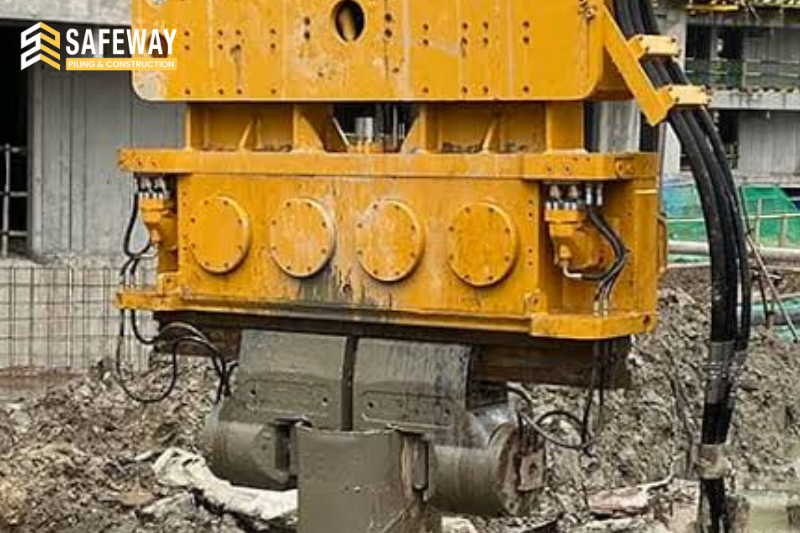
A vibratory hammer is a machine used to install and remove steel sheet piles. It has a motor, rotating weights, a clamp, and a system that supports the machine during operation. The rotating weights create vibration, and the clamp transfers this vibration to the steel pile. As the pile vibrates, the soil around it offers less resistance, helping the pile move into the ground. The machine may be connected to a crane or a suitable excavator, depending on its design. Vibratory hammers are often used for sheet pile walls, excavation support, and riverbank protection. Before choosing one, engineers need to check the soil type, pile size, required depth, and machine capacity.
How a Vibratory Hammer Works
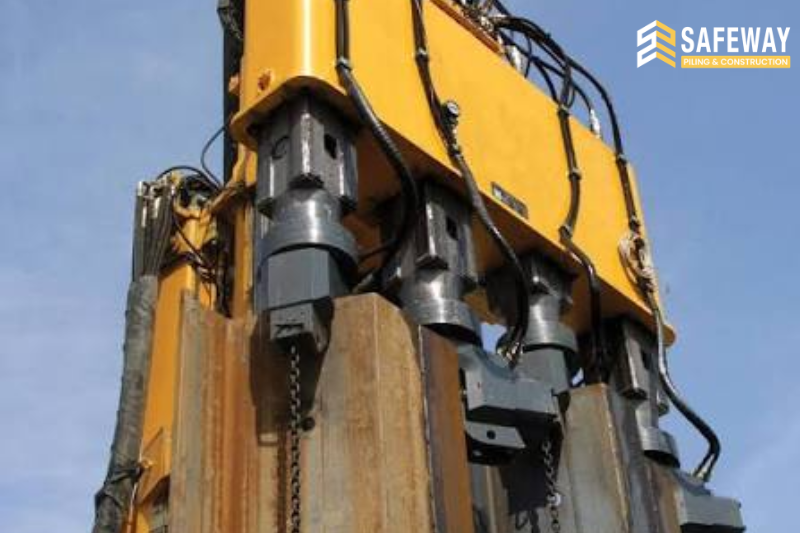
A vibratory hammer works by creating rapid vibration and transferring it to a steel sheet pile. The machine’s motor turns special weights called eccentric weights. These weights create vibration as they rotate. The clamp holds the sheet pile and transfers the vibration to it. This movement helps reduce the friction between the pile and the soil, allowing the pile to move downward when the machine applies the required force. The operator checks the pile’s position and depth during the work to make sure it follows the planned line.
The installation process usually follows these steps:
- Position the Machine: The operator brings the hammer to the correct location and checks that the machine is stable and ready for work.
- Grip the Sheet Pile: The clamp holds the steel pile firmly. A proper grip is important because it helps transfer vibration from the machine to the pile.
- Start the Vibration: The motor starts turning the eccentric weights, which create vibration. The machine transfers this vibration through the clamp to the sheet pile.
- Drive the Pile into the Soil: The operator applies the required downward force while the vibration helps the pile move into the ground. The operator must watch the pile during this process.
- Check the Pile Position: The operator checks whether the pile is straight and follows the planned line. The installation depth must also be checked against the project requirements.
- Move to the Next Pile: Once the pile reaches the required depth and passes the necessary checks, the operator moves the hammer to the next pile.
Main Parts of a Vibratory Hammer
Knowing the main parts of a vibratory hammer helps engineers understand how the machine works and what to check before use.
- Motor: The motor provides the power needed to create vibration. Depending on the machine, it may use hydraulic or electric power.
- Eccentric Weights: These weights rotate inside the machine and create vibration. The vibration helps the sheet pile move through the soil.
- Clamp: The clamp grips the steel sheet pile and transfers vibration from the hammer to the pile. It must fit the pile properly and hold it securely.
- Support or Mounting System: This system holds and positions the hammer during installation. The exact arrangement depends on the machine and the equipment used to operate it.
- Hydraulic System: In a hydraulic hammer, this system supplies the power needed to run the machine. Hoses and connections should be checked before work starts.
- Control System: The operator uses the controls to run the machine and check its operation. All controls must be used according to the manufacturer’s instructions.
Where Are Vibratory Hammers Used?
Vibratory hammers are used in different construction projects where steel sheet piles are needed. The right machine and installation method depend on the ground conditions and project design.
- Excavation Support: Sheet piles help hold back soil around excavations for basements and foundations. A vibratory hammer can install these piles before excavation begins.
- Riverbank Protection: Steel sheet piles can help protect riverbanks from soil loss and erosion. A suitable vibratory hammer can install the piles along the planned line.
- Road and Bridge Projects: Sheet piles are used in some road, bridge, and infrastructure projects to support soil during construction. Engineers must check the ground and nearby structures before choosing the installation method.
- Waterfront Construction: Sheet piles can be used for retaining walls and other support work near rivers and waterways. Soil conditions, water levels, and machine access must be considered.
- Cofferdam Construction: A cofferdam is a temporary enclosure that helps create a working area for construction in or near water. Sheet piles can form the walls of a cofferdam when the design and ground conditions allow it.
- Sheet Pile Removal: Some vibratory hammers can also remove sheet piles after temporary construction work is complete. The operator must check the pile condition and nearby ground before starting removal.
What Affects Vibratory Hammer Performance?
Not every vibratory hammer performs the same way on every site. Engineers should check several factors before selecting a machine.
- Soil Type: Loose sand, dense sand, clay, gravel, and rocky ground behave differently during pile installation. Some soils allow easier penetration, while hard layers or buried objects may stop the pile.
- Sheet Pile Size: Long, thick, or heavy piles may need a machine with suitable capacity. The hammer and clamp must match the pile being installed.
- Required Depth: The deeper the pile needs to go, the more important it is to select suitable equipment. Engineers should confirm that the machine can meet the required depth under the expected soil conditions.
- Machine Capacity: The machine must provide enough force and vibration for the pile and ground conditions. Using an unsuitable machine can slow down the work or make installation difficult.
- Vibration Settings: The machine’s vibration settings affect how it works in the soil. The operator should use the correct settings according to the machine instructions and site requirements.
- Nearby Buildings: Vibration can affect nearby buildings, foundations, and underground services. Engineers should assess the risks and arrange monitoring when required.
- Operator Skill: An experienced operator can help maintain the correct pile position and notice problems early. Proper training also helps reduce the risk of equipment damage and unsafe operation.
Vibratory Hammer vs. Impact Hammer
A vibratory hammer and an impact hammer both install steel sheet piles, but they work in different ways. A vibratory hammer uses rapid vibration to help reduce soil resistance, while an impact hammer drives the pile with repeated blows. A vibratory hammer can install piles efficiently in suitable ground conditions and avoids the repeated impact blows of an impact hammer. However, it still creates vibration and noise, so it may not be suitable for every site. An impact hammer may work better for some soil conditions and project requirements. Engineers should compare the soil type, pile size, required depth, nearby buildings, noise limits, and available equipment before choosing a method.
Common Problems During Vibratory Hammer Installation
Problems can occur if the soil is too hard, the machine is unsuitable, or the pile is not held correctly. Finding the cause early can help prevent delays and damage.
- The Pile Stops Moving: Dense soil, hard layers, or buried concrete may stop the pile from going deeper. The team should check the soil information and installation records before deciding what to do next.
- The Pile Moves Out of Line: A pile may become tilted or move away from its planned position. The operator should check alignment during installation so the problem can be corrected early.
- The Clamp Does Not Hold Properly: A loose or unsuitable clamp may allow the pile to slip. The operator should stop the machine and check the clamp before continuing.
- Too Much Vibration Near Buildings: Vibration may affect nearby structures or services. The team should follow the project’s monitoring plan and review the installation method if vibration becomes higher than the approved limit.
- The Machine Has a Technical Problem: Hydraulic leaks, overheating, or other machine faults can affect performance. The operator should stop work when needed and follow the manufacturer’s instructions.
- The Pile Goes Down Too Slowly: Slow penetration may indicate high soil resistance, an obstruction, or unsuitable machine settings. The team should record the problem and consult the responsible engineer before making changes.
Safety Tips for Using a Vibratory Hammer
Vibratory hammers are powerful machines, and steel sheet piles are heavy. Proper safety checks are important before and during installation.
- Check the Machine: Inspect the hammer, clamp, hoses, and controls before starting work. Do not use damaged equipment.
- Check the Lifting Equipment: Make sure the crane, excavator, lifting accessories, and mounting arrangement are suitable for the load and machine.
- Hold the Pile Securely: Check that the clamp grips the pile properly before starting the vibration. Keep workers away from suspended piles.
- Check Pile Alignment: Monitor the pile position during installation to reduce errors and problems with the sheet pile wall.
- Protect Nearby Buildings: Identify nearby structures and underground services before work begins. Monitor vibration or ground movement when required by the project.
- Wear Safety Equipment: Workers should use the required helmet, safety shoes, gloves, eye protection, hearing protection, and other personal protective equipment.
- Stop if a Problem Occurs: Stop the machine if the clamp slips, the pile behaves unexpectedly, or the equipment shows a warning. Find the cause and make the necessary checks before restarting.
How Safeway Piling Supports Sheet Pile Projects
Safeway Piling & Construction recognises that choosing the right equipment is an important part of sheet pile installation. Before selecting a vibratory hammer, contractors should check the soil conditions, pile dimensions, required depth, nearby structures, and machine specifications. A vibratory hammer can be a useful choice for many projects, but it may not suit every type of soil or site. Proper planning, correct equipment selection, and regular checks can help reduce installation problems and support safe work. Engineers should always follow the approved project design and the manufacturer’s instructions when planning and carrying out sheet pile installation.
Conclusion
Understanding How a Vibratory Hammer Works helps engineers and contractors choose the right equipment for steel sheet pile installation. The machine creates vibration through rotating weights and transfers it to the pile using a clamp. This vibration helps reduce soil resistance, allowing the pile to move into the ground. However, the results depend on the soil, pile size, machine capacity, and site conditions. Engineers must also consider nearby buildings, vibration limits, and worker safety before starting work. With the right equipment and careful planning, a vibratory hammer can be a useful solution for suitable sheet pile projects. Safeway Piling & Construction understands the importance of selecting an installation method that matches the needs of each project.
Frequently Asked Questions
- How does a vibratory hammer work?
A vibratory hammer uses rotating weights to create vibration. The clamp transfers this vibration to the steel sheet pile, helping reduce soil resistance so the pile can move into the ground.
- Can a vibratory hammer drive steel sheet piles?
Yes. Vibratory hammers are used to install steel sheet piles for excavation support, riverbank protection, retaining walls, and other construction work when ground conditions are suitable.
- Is a vibratory hammer suitable for all soil types?
No. Its performance depends on the soil and machine capacity. Dense ground, rock, and buried obstructions may make installation difficult.
- Does a vibratory hammer make noise?
Yes. It creates operating noise and ground vibration. Engineers should check site restrictions and consider monitoring when work takes place near sensitive buildings.
- What is the difference between a vibratory hammer and an impact hammer?
A vibratory hammer uses vibration to help a pile move through the soil. An impact hammer uses repeated blows to drive the pile down.
- Can a vibratory hammer remove sheet piles?
Yes. Some vibratory hammers can remove sheet piles after temporary work is complete. The removal method must be suitable for the pile and ground conditions.
- What should engineers check before using a vibratory hammer?
They should check the soil conditions, pile size, required depth, machine capacity, clamp, site access, nearby structures, and safety requirements.
- Why does a sheet pile sometimes stop during installation?
The pile may meet dense soil, a hard layer, or an underground obstruction. The team should investigate the cause before continuing.
- Can a vibratory hammer damage nearby buildings?
Vibration may affect sensitive structures, depending on the ground and site conditions. Engineers should assess the risk and arrange monitoring where required.
- How can contractors improve sheet pile installation?
Contractors should select suitable equipment, check the soil, secure the pile properly, monitor alignment, maintain the machine, and follow the approved installation plan.