
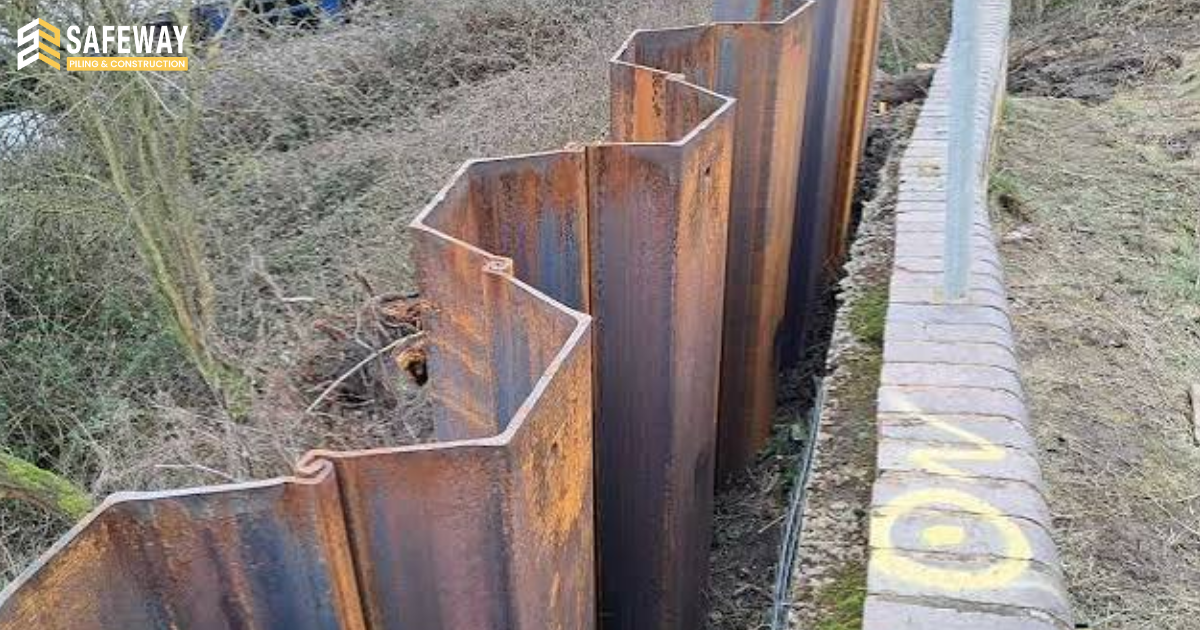
Choosing the right sheet pile installation method is an important step in planning a safe and successful construction project. Sheet piles are used to retain soil, support excavations, protect riverbanks, and create temporary or permanent retaining walls. However, different projects require different installation methods depending on soil conditions, pile specifications, site access, noise restrictions, and project costs. Selecting the wrong method can cause installation delays, alignment problems, and additional expenses. Safeway Piling & Construction helps construction teams understand sheet pile installation requirements and consider suitable solutions based on project conditions.
What Is a Sheet Pile Installation Method?
A sheet pile installation method is the technique used to drive or press sheet piles into the ground to create a continuous wall. The method depends on the type of sheet pile, ground resistance, required installation depth, available equipment, and surrounding structures. Common methods include impact hammer driving, vibratory hammer installation, hydraulic pressing, and press-in systems such as Silent Piler machines. Each method has different advantages and limitations, so engineers should evaluate the site conditions and project design before making a decision.
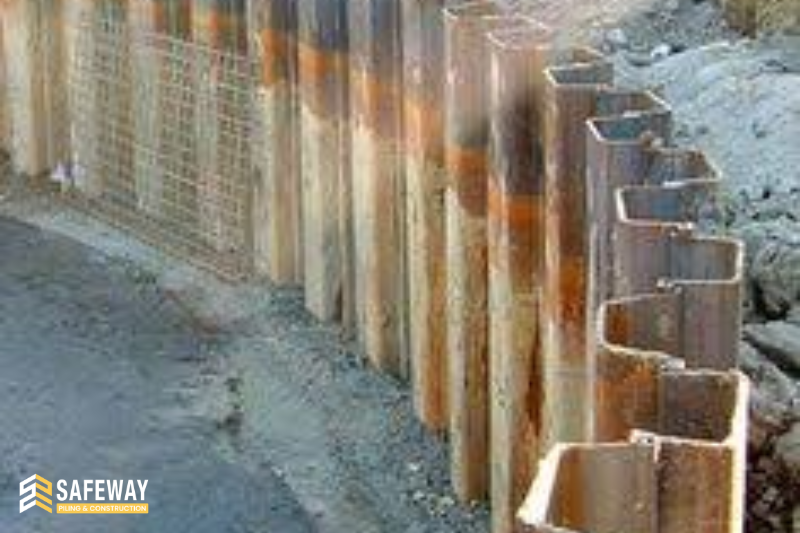
Why Is Choosing the Right Sheet Pile Installation Method Important?
Choosing the right installation method helps improve construction quality, control noise and vibration, manage project costs, and reduce avoidable delays. Different methods perform differently in soft soil, dense ground, and restricted construction areas. The selected method also affects installation speed, equipment requirements, and the potential impact on nearby buildings. A proper assessment before starting work helps contractors plan equipment, labour, safety measures, and installation procedures more effectively.
Types of Sheet Pile Installation Methods
1. Impact Hammer Driving: Impact hammer driving uses repeated blows from a hammer to drive sheet piles into the ground. It can be effective for many piling projects, depending on soil conditions and pile specifications. However, it may create significant noise and ground vibration, making it less suitable for some residential or vibration-sensitive locations.
2. Vibratory Hammer Installation: A vibratory hammer uses vibration to reduce soil resistance and help the sheet pile move into the ground. This method is commonly considered for suitable soil conditions and can offer fast installation. Its performance depends on soil type, pile design, equipment capacity, and site restrictions. Vibration effects on nearby structures should be assessed before work begins.
3. Hydraulic Pressing Method: Hydraulic pressing uses controlled hydraulic force to push sheet piles into the ground. This approach can reduce noise and vibration compared with conventional impact driving. It may be suitable for urban construction projects and locations near existing buildings, provided the ground conditions and equipment are appropriate.
4. Silent Piler Installation: A Silent Piler is a specialised press-in system that installs sheet piles using hydraulic force. Many systems use previously installed piles to provide the reaction force required to press the next pile into the ground. This method is useful where noise and vibration need to be minimised, but machine compatibility, soil resistance, and working space must be checked.
5. Pre-Augering or Ground Preparation: In some ground conditions, pre-augering or other approved ground preparation may be considered to help reduce installation resistance. This is not a standalone driving method for every project. It must be assessed by the project engineer because ground preparation can affect soil stability, wall performance, and the installation process.
Factors to Consider When Choosing a Sheet Pile Installation Method
Soil Conditions: Soil type is one of the most important factors. Soft soil may allow easier installation, while dense soil, gravel, or buried obstructions can increase resistance. A geotechnical investigation helps engineers understand ground conditions and choose a suitable installation approach.
Sheet Pile Type and Size: Steel sheet piles come in different profiles, lengths, and thicknesses. The selected installation equipment must be compatible with the pile specifications and provide the force needed for the expected ground conditions.
Required Installation Depth: The required depth affects equipment selection, installation time, and project planning. Deeper installations may require more careful monitoring and a suitable method based on soil resistance and structural design.
Noise and Vibration Restrictions: Projects near homes, hospitals, schools, offices, or existing buildings may require lower-noise and lower-vibration methods. Hydraulic pressing or Silent Piler installation may be considered where suitable, but the site still needs a proper risk assessment.
Nearby Buildings and Underground Utilities: Existing foundations, roads, pipelines, cables, and other underground services can affect the installation method. The team should identify these features and assess possible ground movement or vibration risks before work begins.
Site Access and Working Space: Some machines need more space for setup, operation, and sheet pile handling than others. Restricted sites may require specialised equipment or a different installation sequence. Access and lifting arrangements should be planned before the equipment arrives.
Project Budget: Installation costs depend on equipment mobilisation, pile specifications, ground conditions, labour, project duration, and site preparation. The cheapest method is not always the most suitable. Contractors should compare the overall cost with safety, quality, and performance requirements.
Project Schedule: Some methods can install piles quickly in suitable conditions, while others may require more setup or careful pressing. The installation method should match the project schedule without compromising the approved design or safety requirements.
How to Choose the Right Sheet Pile Installation Method Step by Step
Step 1: Review the Project Requirements: Identify the purpose of the sheet pile wall, the required depth, excavation dimensions, groundwater conditions, and expected loads. These details help engineers understand the technical requirements before selecting equipment.
Step 2: Conduct a Soil Investigation: Review the available geotechnical report and identify soil layers, ground resistance, groundwater levels, and possible obstructions. If the available information is insufficient, further investigation may be needed before finalising the method.
Step 3: Check Nearby Structures and Restrictions: Assess nearby buildings, roads, underground utilities, and noise restrictions. This step helps identify whether the installation process needs additional vibration monitoring or specialised equipment.
Step 4: Compare Suitable Installation Methods: Consider impact driving, vibratory installation, hydraulic pressing, and Silent Piler systems where appropriate. Compare their suitability for the ground conditions, pile type, working space, and project requirements.
Step 5: Confirm Equipment Compatibility: Make sure the selected machine can handle the pile profile, length, and expected ground resistance. The equipment’s operating limits and site setup requirements should be checked before mobilisation.
Step 6: Estimate the Overall Cost: Include equipment transport, setup, labour, installation time, possible ground preparation, and monitoring requirements. A project-specific estimate helps avoid unexpected expenses.
Step 7: Prepare the Installation Plan: Establish the installation sequence, alignment checks, safety procedures, quality control measures, and response plan for unexpected ground conditions. The responsible engineer should review the plan before work begins.
Step 8: Monitor Installation Quality: During the work, check pile alignment, installation depth, interlock connections, and changes in ground resistance. Keep installation records and investigate any unexpected problems before proceeding.
Which Sheet Pile Installation Method Is Best for Different Projects?
Urban Construction Projects: Where noise and vibration restrictions are important, hydraulic pressing or Silent Piler installation may be considered if the ground conditions and equipment allow it.
Projects in Suitable Soft Soil: Vibratory hammer installation may provide efficient installation in suitable ground conditions. The team should still assess the potential effects of vibration on nearby structures.
Projects Requiring Impact Driving: Impact hammer driving may be suitable when the ground conditions, pile specifications, equipment availability, and site restrictions support its use.
Basement and Deep Excavation Projects: The method should be selected according to the excavation design, soil pressure, groundwater conditions, nearby foundations, and required retaining performance. Noise and vibration restrictions may also influence the choice.
Restricted Working Areas: Projects with limited access may need specialised equipment or a carefully planned installation sequence. The team should confirm that the machine can operate safely within the available space.
Common Mistakes to Avoid When Selecting a Sheet Pile Installation Method
- Ignoring Soil Conditions: Choosing a method without reviewing the soil report can lead to difficult installation, delays, or unexpected resistance.
- Focusing Only on Cost: A low initial price may not reflect equipment mobilisation, ground preparation, monitoring, and potential delays.
- Overlooking Nearby Structures: Failing to assess nearby buildings and underground utilities can increase the risk of damage or service disruption.
- Using Incompatible Equipment: The machine must suit the selected sheet pile profile and expected ground resistance.
- Skipping Alignment Checks: Poor alignment can affect interlock connections and the quality of the completed wall.
- Ignoring Safety Planning: Proper lifting procedures, machine inspections, exclusion zones, and emergency arrangements are essential for safe installation.
Safety Considerations for Sheet Pile Installation
Safety should be considered before, during, and after sheet pile installation. Workers should inspect equipment, use suitable lifting systems, wear appropriate personal protective equipment, and keep clear of suspended piles and moving machinery. The site team should identify underground utilities, assess nearby structures, and follow the approved installation method statement. Operators must stay within the equipment manufacturer’s limits and stop work if unexpected resistance, instability, or other unsafe conditions occur. Regular inspection and communication between the operator, site supervisor, and engineer help maintain safe working conditions.
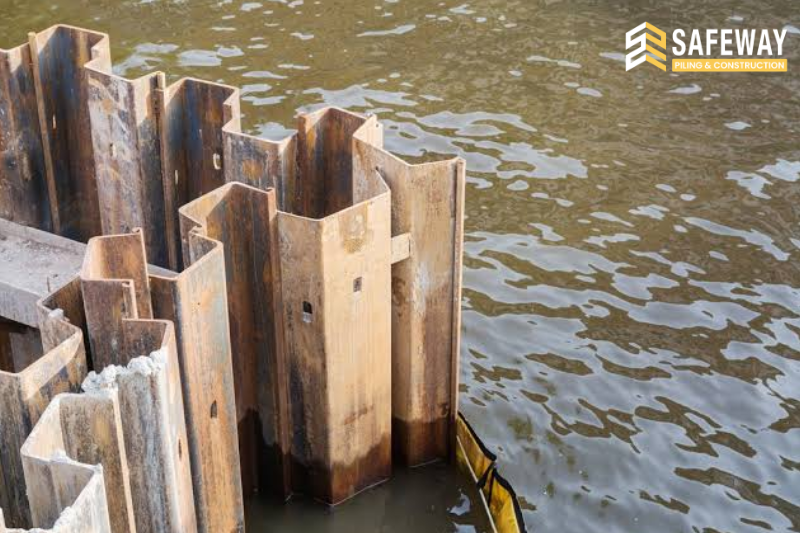
How Safeway Piling & Construction Can Help
Safeway Piling & Construction supports piling and sheet pile construction requirements by helping project teams consider their site conditions, installation needs, and equipment requirements. Choosing a suitable method involves reviewing soil conditions, sheet pile specifications, required depth, working space, noise restrictions, and project design. Before work begins, contractors should discuss these factors with the responsible engineering team and confirm the appropriate installation procedure. Proper planning helps improve installation quality, control risks, and reduce avoidable delays.
Conclusion
Choosing the Right Sheet Pile Installation Method depends on soil conditions, sheet pile specifications, installation depth, equipment capacity, site access, noise restrictions, and project budget. Impact hammer driving, vibratory hammer installation, hydraulic pressing, and Silent Piler systems each have different applications and limitations. The best method is the one that meets the engineering design and site requirements while maintaining safety, quality, and efficient project delivery. Safeway Piling & Construction can help project teams discuss their sheet pile installation needs and consider suitable solutions for their construction projects.
Frequently Asked Questions
1. What is the best sheet pile installation method?
The best method depends on soil conditions, pile specifications, required depth, nearby structures, noise restrictions, and equipment availability. A site-specific assessment is needed before selecting a method.
2. Which sheet pile installation method creates less noise?
Hydraulic pressing and Silent Piler systems generally create less noise than conventional impact hammer driving. Their suitability depends on ground conditions and equipment requirements.
3. Is a vibratory hammer suitable for every soil type?
No. A vibratory hammer may work well in suitable ground conditions, but dense layers, obstructions, and site restrictions can affect performance. Soil assessment is important.
4. What factors affect sheet pile installation costs?
Costs can depend on pile type and length, soil conditions, installation depth, equipment mobilisation, labour, site access, ground preparation, and project duration.
5. Can Silent Piler machines be used near existing buildings?
They may be suitable where reducing noise and vibration is important. However, engineers should assess ground movement risks, machine access, and site conditions before installation.
6. Why is a soil investigation important before sheet pile installation?
A soil investigation helps engineers understand ground resistance, soil layers, groundwater conditions, and possible obstructions. This information supports safer equipment and method selection.
7. Does Safeway Piling & Construction help with sheet pile installation projects?
Safeway Piling & Construction can discuss sheet pile installation requirements and help project teams consider suitable approaches based on their project conditions.