
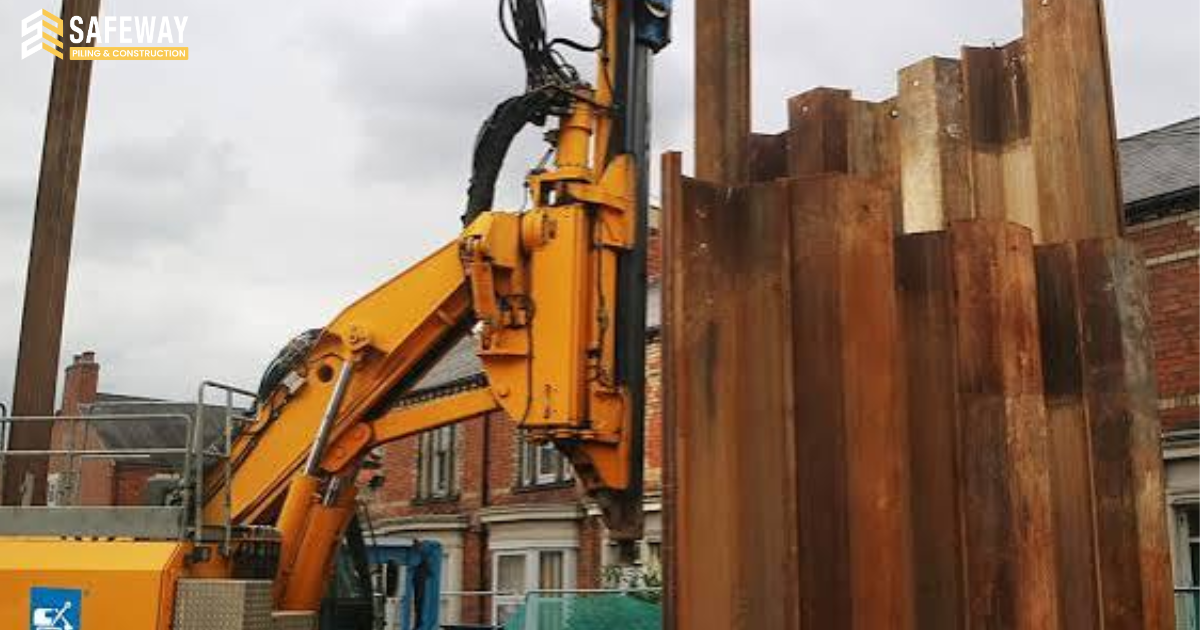
What Are the Sheet Pile Installation Methods?
Sheet pile installation methods are the ways contractors put interlocking sheet piles into the ground to build a retaining wall. These walls hold back soil, help control excavation sites, protect riverbanks, and are used to build cofferdams. Steel sheet piles are often used because their edges lock together to form a wall. When designed and installed correctly, this wall can stop soil from moving. Limit water from seeping through. There are common ways to install sheet piles. One is using an impact hammer to drive the piles into the ground. Another is using a hammer, which shakes the piles down with vibrations. Some projects use a press to push the piles in without hammering. There’s also a method that uses a pre-auger to drill a hole, making it easier to install the pile.
The best method to use depends on the type of soil, how big the piles are, how deep they need to go, what’s near the site, and what the project needs. Engineers must check all these things before choosing the equipment. This helps make sure the installation is safe and works well.
Main Methods of Sheet Pile Installation
Impact Hammer Installation: This method uses repeated blows to drive sheet piles into the ground. It is suitable for projects where piles need to penetrate dense soil layers or meet specific driving requirements. Engineers should monitor noise, ground vibration, and pile damage during installation.
Vibratory Hammer Installation: This method uses rapid mechanical vibrations to reduce resistance between the pile and the surrounding soil. It often works well in granular soils, such as sand, and is commonly used for sheet pile walls, cofferdams, and excavation support.
Hydraulic Press-In Installation: This method uses controlled hydraulic force to push sheet piles into the ground instead of relying mainly on impact blows or continuous vibration. It is useful in noise-sensitive and vibration-sensitive areas when the equipment and ground conditions are suitable.
Pre-Auger-Assisted Installation: This method involves drilling or loosening the soil along the planned pile line before installing sheet piles. It can help reduce penetration resistance in difficult ground conditions, but engineers must control soil removal to prevent ground loss and settlement.
Water Jet-Assisted Installation: This method uses pressurized water near the pile toe to loosen suitable soil and reduce resistance during penetration. Engineers must assess groundwater conditions and the risk of soil erosion or settlement before using this technique.
Combined Installation Methods: This approach combines two or more techniques to deal with changing soil conditions. For example, contractors may use a vibratory hammer for initial driving and an impact hammer to complete installation when the project specifications require it.
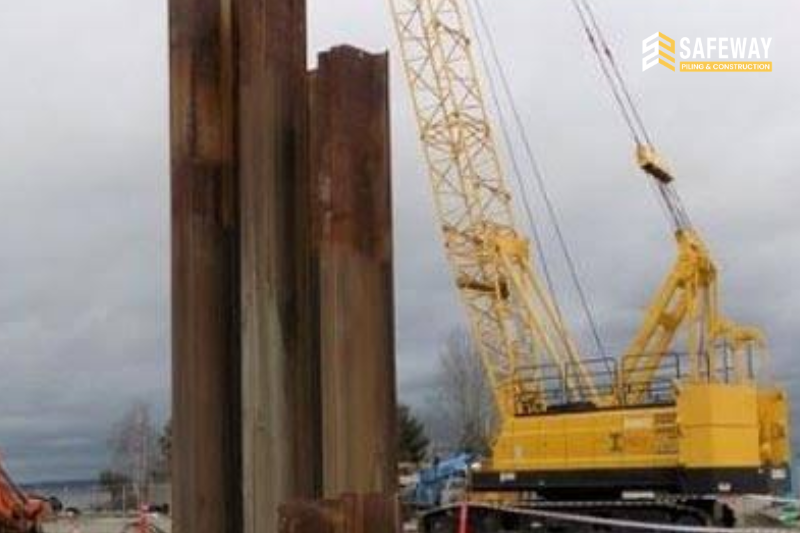
How to Choose the Right Sheet Pile Installation Method
Choosing the right method helps engineers manage installation time, cost, safety, and retaining wall performance. Each project requires a separate assessment because soil conditions and site restrictions can vary significantly.
Soil Conditions: Review the geotechnical report to identify sand, clay, silt, dense layers, groundwater, and possible obstructions. The soil profile helps engineers determine which installation technique can achieve the required depth safely and efficiently.
Pile Type and Dimensions: Check the pile length, width, profile, weight, material, and interlock design. The installation equipment must match the pile specifications and provide sufficient capacity without damaging the pile sections.
Required Installation Depth: Deeper piles may require different equipment or a combined installation approach, depending on soil resistance. Engineers should confirm the required embedment depth and acceptance criteria before work begins.
Nearby Buildings and Structures: Assess the effects of noise, vibration, and possible ground movement on adjacent buildings, roads, underground utilities, and sensitive facilities. Hydraulic press-in methods may be worth considering where vibration limits are strict, provided the equipment is suitable for the site.
Site Access and Working Space: Consider the available space for cranes, excavators, power packs, pile storage, and lifting operations. Restricted access can affect the choice of equipment and the sequence of installation.
Project Budget and Schedule: Compare equipment mobilisation, rental, transport, operator costs, installation speed, and possible ground preparation. The lowest initial cost may not provide the best overall value if the method causes delays or requires additional equipment.
Equipment Used for Sheet Pile Installation
Different sheet pile installation methods require different machines and supporting equipment. Engineers should confirm compatibility before starting work.
Vibratory Hammer: A vibratory hammer uses rotating eccentric weights to generate vibrations that help reduce soil resistance. It is commonly used for installing and extracting suitable steel sheet piles, especially in granular soils.
Impact Hammer: An impact hammer drives piles using repeated blows. It may be suitable where greater impact energy is required or where the project specifications require impact driving.
Hydraulic Press-In Machine: This machine pushes sheet piles into the ground using controlled hydraulic force. It can help reduce installation noise and vibration when compared with conventional driving methods, although performance depends on the equipment and ground conditions.
Crane and Lifting Equipment: A crane lifts, positions, and supports piles and compatible installation machinery. Lifting equipment must have adequate capacity and operate according to the approved lifting plan.
Excavator and Supporting Equipment: An excavator may support selected installation systems, site preparation, or material handling. Its suitability depends on the attachment, hydraulic capacity, machine rating, and work requirements.
Pre-Auger Equipment: Pre-augering equipment drills or loosens soil before pile installation. Engineers may consider it when ground resistance makes direct driving difficult and the technique is compatible with the design.
What Engineers Should Know Before Sheet Pile Installation
Engineers should understand the relationship between ground conditions, equipment performance, pile alignment, and the completed retaining wall. Proper planning helps reduce installation problems and supports compliance with the approved design.
Geotechnical Investigation: Engineers should review soil layers, groundwater levels, soil strength, and potential obstructions before choosing the installation method. Unexpected ground conditions can reduce driving efficiency and affect the required embedment depth.
Pile Alignment and Verticality: The first piles need careful positioning because alignment errors can affect the remaining wall. Engineers should establish suitable guides, check verticality during installation, and monitor the connection between adjacent pile interlocks.
Equipment Capacity and Compatibility: The hammer or press-in machine must match the pile dimensions, required depth, and expected ground resistance. Engineers should also verify the capacity of the crane, clamp, hydraulic system, and lifting accessories.
Noise and Ground Vibration: Impact and vibratory installation can produce ground vibration and noise. Engineers should assess nearby structures, establish project-specific monitoring requirements, and consider alternative techniques when site restrictions demand them.
Groundwater and Water Control: Sheet pile walls may form part of a temporary excavation support or water-control system. Engineers should assess groundwater conditions, seepage, and the possibility of soil loss to ensure the selected installation method does not create unacceptable risks.
Installation Records and Quality Control: Record pile identification, installation depth, equipment used, alignment checks, unusual driving resistance, and relevant monitoring results. These records help the engineering team evaluate the installation process and confirm that project requirements have been met.
Common Problems During Sheet Pile Installation
Sheet pile installation can face challenges when soil conditions, equipment selection, or installation procedures do not match the project requirements.
Pile Refusal: A pile may stop penetrating because it encounters dense soil, buried obstructions, or unsuitable driving conditions. Engineers should investigate the cause before changing the method or applying additional force.
Pile Misalignment: Incorrect positioning, poor guidance, or unexpected ground resistance can cause piles to lean or move away from the planned line. Proper guides and regular alignment checks help reduce this problem.
Interlock Damage: Excessive force, incorrect alignment, or unsuitable handling can damage the interlocking edges of sheet piles. Workers should inspect piles before installation and use equipment that matches the pile profile.
Excessive Vibration: Vibratory or impact driving may affect nearby structures and underground services. Engineers should assess the risk before installation and consider monitoring, changes in operating conditions, or an alternative method if necessary.
Unexpected Ground Movement: Poorly controlled installation, excessive soil removal, or changes in groundwater conditions may cause settlement or ground loss. The engineering team should monitor the site and follow the approved installation procedure.
Safety Measures During Sheet Pile Installation
Sheet piling work involves heavy equipment, suspended loads, hydraulic systems, and changing ground conditions. Contractors should follow an approved method statement and lifting plan before starting work.
Inspect Equipment Before Use: Check hammers, clamps, hydraulic hoses, lifting points, and supporting machinery. Defective equipment should not be used until the responsible personnel confirm that it is safe.
Use Proper Lifting Procedures: Confirm pile weights, lifting points, crane capacity, and ground stability. Keep workers clear of suspended piles and establish an exclusion zone around lifting operations.
Monitor Pile Position: Use suitable guides and check pile alignment during installation. Stop work if the pile moves unexpectedly or the equipment becomes unstable.
Protect Nearby Structures: Identify underground utilities and sensitive buildings before installation. Carry out vibration or settlement monitoring when required by the project risk assessment.
Use Trained Operators: Only trained and authorised personnel should operate piling equipment. The team should maintain clear communication between the operator, lifting supervisor, and ground workers.
Follow the Approved Method Statement: Ensure the installation sequence, equipment selection, inspection procedures, and emergency arrangements meet the approved project requirements.
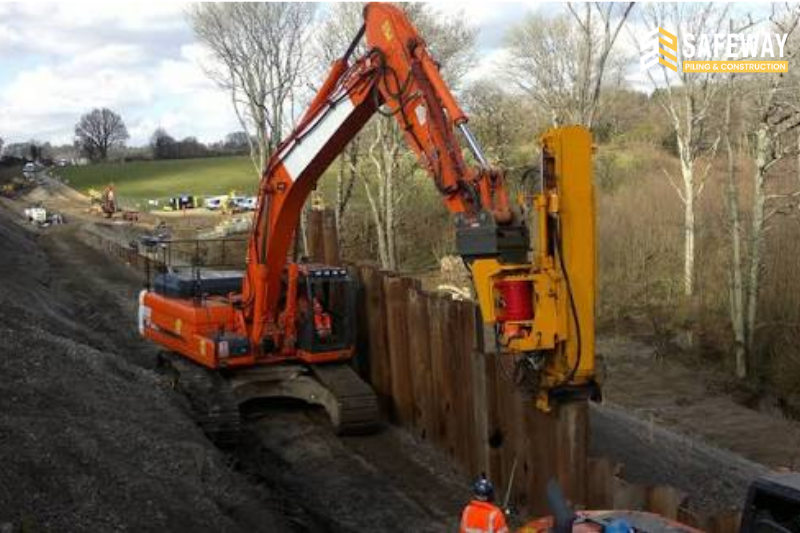
Sheet Pile Installation Services by Safeway Piling & Constructions
Safeway Piling & Constructions supports piling and foundation-related construction projects where the selection of a suitable sheet pile installation method is essential. Different sites require different approaches, depending on soil conditions, retaining wall requirements, available working space, and nearby structures. For excavation support, basement construction, cofferdams, and riverbank protection, the project team should assess the geotechnical report and select suitable installation equipment before work begins. Proper planning helps contractors manage installation efficiency, maintain pile alignment, and reduce avoidable delays.
Engineers and contractors should also consider equipment capacity, ground vibration, safety procedures, and the required installation depth. The selected method should always meet the approved engineering design and project specifications. If you are planning a sheet piling project in Bangladesh, contact Safeway Piling & Constructions to discuss your project requirements and suitable piling solutions.
Conclusion
Different sheet pile installation methods serve different construction needs. Impact hammer installation, vibratory hammer installation, hydraulic press-in systems, pre-auger-assisted installation, and water jet-assisted techniques each have specific advantages and limitations. The right choice depends on soil conditions, pile specifications, installation depth, site access, and nearby structures. Engineers should assess the ground conditions, choose compatible equipment, monitor pile alignment, and follow the approved construction procedure. These steps help improve installation quality and reduce risks during piling work.
For sheet piling projects in Bangladesh, Safeway Piling & Constructions encourages contractors to select installation methods based on engineering requirements, site conditions, and safety considerations.
Frequently Asked Questions (FAQs)
- What are the main sheet pile installation methods?
The main methods include impact hammer driving, vibratory hammer driving, hydraulic press-in installation, pre-auger-assisted installation, and selected water jet-assisted techniques. Some projects combine methods to deal with changing soil conditions.
- Which sheet pile installation method is best for sandy soil?
Vibratory hammer installation often works well in suitable sandy soils because vibration can reduce resistance along the pile surface. Engineers should still check soil density, groundwater conditions, pile specifications, and nearby structures.
- Which sheet pile installation method produces less vibration?
Hydraulic press-in installation can produce very low noise and ground vibration compared with conventional impact or vibratory driving. However, the result depends on the machine, ground conditions, and installation process.
- Can sheet piles be installed in hard soil?
Yes, but hard or dense ground may require specialised equipment, pre-augering, impact driving, or a combination of methods. Engineers should investigate the ground conditions before selecting the appropriate technique.
- What equipment is required for sheet pile installation?
Equipment may include a vibratory hammer, impact hammer, hydraulic press-in machine, crane, lifting accessories, excavator, and pre-augering equipment. The required setup depends on the installation method and project conditions.
- How do engineers select a sheet pile installation method?
Engineers consider soil conditions, pile dimensions, installation depth, groundwater, nearby structures, site access, noise restrictions, and project cost. They then select a method that meets the approved design and safety requirements.
- Why is pile alignment important during installation?
Correct alignment helps sheet piles connect properly through their interlocks and follow the designed wall line. Poor alignment can cause installation difficulties and affect the performance of the completed retaining wall.
- Can the same sheet piles be reused after installation?
Temporary steel sheet piles can often be removed and reused if their condition permits. Engineers or contractors should inspect them for bending, cracks, interlock damage, and other defects before reuse.