
Situ Pile Meaning or What is Situ Pile?
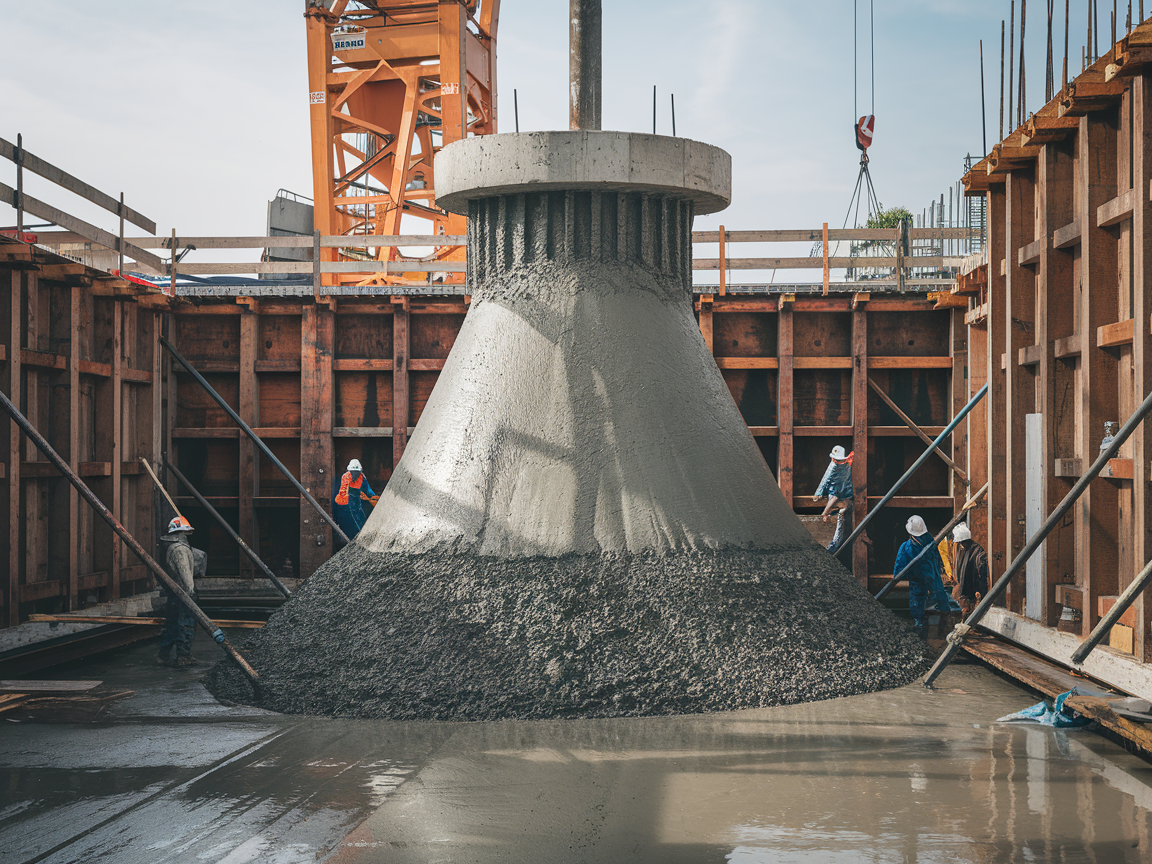
Situ pile meaning is a type of deep foundation constructed by pouring concrete into a pre-drilled or excavated hole directly at the construction site. This method differs from precast piles, manufactured off-site and transported for installation.
Key Features:
- On-site Construction: Built directly at the project site.
- Flexibility: Tailored to specific soil and load conditions.
- Minimal Noise: Ideal for urban environments.
The process involves creating a borehole, installing reinforcement, and pouring concrete, ensuring enhanced stability and integration with the soil. Situ piles are indispensable in modern construction, offering adaptability for various projects.
Where Can Be the Situ Pile Used?
Since situ pile means cast in situ pile that we understand. So situ piles are versatile and find applications in:
- High-Rise Buildings: Providing stability for heavy loads.
- Bridges and Flyovers: Offering resistance to lateral forces.
- Industrial Facilities: Supporting large-scale machinery and frameworks.
- Marine Structures: Used in ports, docks, and jetties for water resistance.
- Infrastructure Projects: Essential for tunnels, retaining walls, and metros.
These piles are particularly beneficial in challenging soil conditions and projects requiring deep foundations, proving their reliability across diverse environments.
Why Use Cast-in-Situ Pile?
Cast-in-situ piles are a popular choice in construction for projects that require deep foundations, especially in areas with challenging soil conditions. These piles are constructed by drilling a hole at the site and then filling it with concrete. Unlike precast piles, cast-in-situ piles are formed directly at the project location, offering unparalleled flexibility in terms of design and installation.
The main reason to use cast-in-situ piles is their adaptability to various soil conditions. They can be installed without causing significant vibrations, making them ideal for projects near existing structures. Furthermore, these piles can be customized to varying lengths and diameters, ensuring optimal load distribution. The cast-in-situ process also allows for the inspection of the borehole before pouring concrete, ensuring that the pile is placed in optimal conditions. This method is particularly suitable for sites with restricted access where transporting large precast piles would be challenging.
In summary, cast-in-situ piles are ideal for projects requiring flexibility, low vibrations, and customization. Their ability to adapt to complex soil profiles and minimize disturbance to nearby structures makes them a preferred choice in modern construction.
Advantages of Using Situ Pile
Using cast-in-situ piles offers several advantages that make them a preferred choice for construction projects:
- Flexibility in Design: Cast-in-situ piles can be customized in terms of length, diameter, and shape, allowing for precise adaptation to project requirements and soil conditions.
- Reduced Vibrations: The construction process generates minimal vibrations, making it suitable for urban areas and projects near sensitive structures.
- Cost Efficiency: Eliminating the need for transportation and heavy machinery to lift precast piles reduces costs significantly.
- Inspection During Construction: The borehole can be inspected before pouring concrete, ensuring better quality control and addressing potential issues like water ingress or soil instability.
- Minimal Environmental Impact: Cast-in-situ piles produce less noise and vibration, reducing their environmental footprint and making them suitable for projects in ecologically sensitive areas.
- Adaptability to Challenging Soil Conditions: These piles are ideal for locations with varying or difficult soil profiles, such as loose or waterlogged soil, where other piling methods might struggle.
These advantages highlight why cast-in-situ piles are often the first choice for foundation solutions in diverse construction projects.
Core Materials Used in Situ Pile
The construction of cast-in-situ piles involves a range of core materials, Situ pile meaning is not like this it will make or use other elements without core materials. Each serves a specific purpose to ensure strength and durability:
- Concrete: High-quality concrete is the primary material used to form the pile. Depending on the project requirements, reinforced concrete is often used for additional strength and load-bearing capacity.
- Reinforcement Steel: Steel reinforcement bars (rebars) are placed within the borehole before pouring concrete. These bars provide tensile strength and ensure the pile can handle complex load conditions.
- Casing: Temporary or permanent casing may be used to stabilize the borehole, especially in loose or waterlogged soils. This prevents soil collapse during the construction process.
- Drilling Fluids: In some cases, drilling fluids like bentonite slurry are used to stabilize the borehole walls. These fluids also help in carrying debris to the surface during drilling.
- Waterproofing Agents: Additives or sealants may be included in the concrete mix to enhance resistance against water ingress, particularly for piles used in marine or flood-prone areas.
By using these materials, cast-in-situ piles achieve the necessary strength, durability, and adaptability to serve as reliable foundation elements in various construction projects.
Situ Pile vs. Precast Pile Comparison
Cast-in-situ piles and precast piles are two popular methods of constructing foundation elements, and each has its advantages and limitations. Situ pile meaning it’s more likely the same benefits as pre-cast pile. Below is a comparison:
Aspect Cast in Situ Pile Precast Pile
| Construction Method | Constructed on-site by pouring concrete | Manufactured off-site and transported |
| Flexibility | Highly customizable in length and diameter | Fixed dimensions; less flexibility |
| Transportation | No transportation required | Requires heavy machinery for transport |
| Soil Adaptability | Suitable for challenging soil profiles | May require additional preparation |
| Vibrations | Low vibrations during installation | High vibrations during driving |
| Inspection | The borehole can be inspected before concreting | No on-site inspection is possible |
| Cost | Cost-effective for large-scale projects | Higher costs due to transportation |
| Time | Longer construction time | Faster installation |
In summary, cast-in-situ piles offer flexibility and adaptability, making them ideal for complex and sensitive projects. Precast piles, on the other hand, provide speed and consistency but may lack the customization and soil adaptability of cast-in-situ methods.