
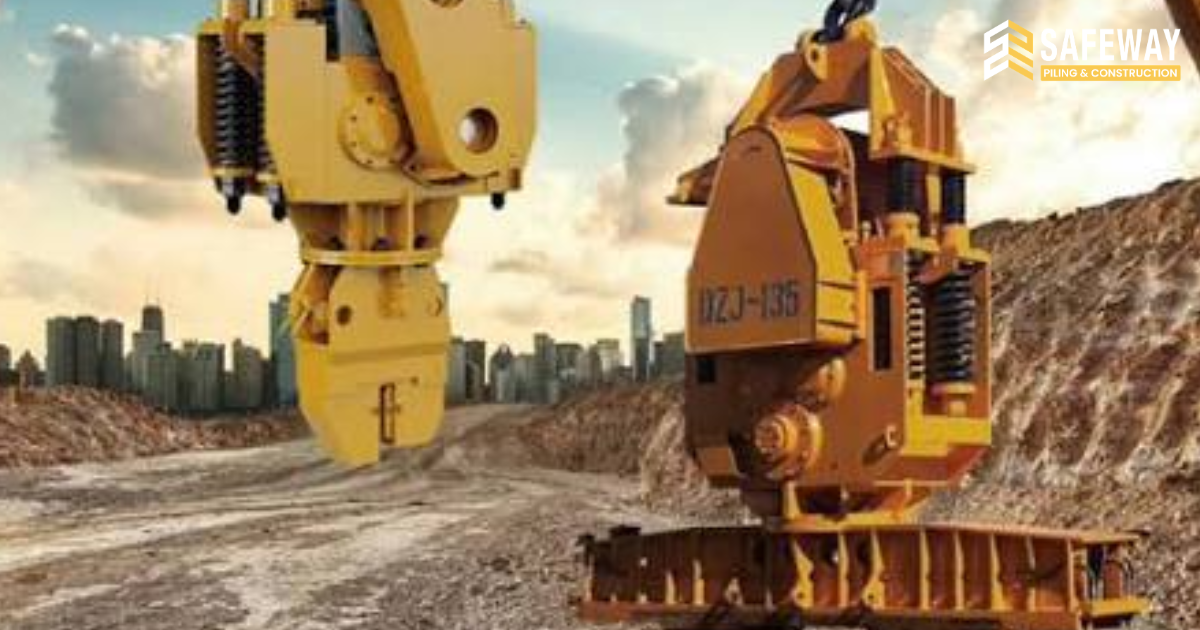
What Is a Vibratory Hammer for Sheet Piles?
A vibratory hammer for sheet piles is a specialized piling machine that uses vibration to drive steel sheet piles into the ground. The machine usually contains rotating eccentric weights that create vibration when the motor operates. These vibrations reduce friction between the sheet pile and the surrounding soil, helping the pile penetrate the ground. The hammer is commonly connected to a crane or piling rig and secured to the sheet pile with a suitable clamp. It is used in projects where steel sheet piles are required to provide soil support, control water entry, or create retaining structures. The machine’s performance depends on its capacity, vibration settings, soil conditions, and the characteristics of the sheet piles being installed.
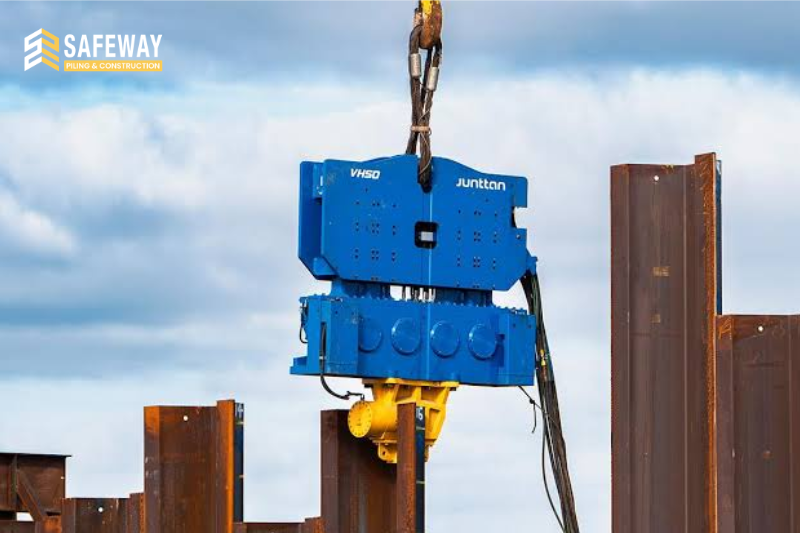
How Does a Vibratory Hammer Work?
A vibratory hammer works by generating rapid vertical vibrations that help push a sheet pile into the soil. The machine grips the top of the pile through a hydraulic or mechanical clamp. When the motor starts, rotating eccentric weights produce vibration, which travels through the clamp into the sheet pile. This movement reduces the resistance between the pile surface and the surrounding soil, allowing the pile to penetrate more easily. The operator controls the installation process while monitoring the pile’s alignment, penetration rate, and machine performance. Once the sheet pile reaches the required depth, the operator stops the machine and releases the clamp according to the equipment manufacturer’s instructions.
Types of Vibratory Hammer for Sheet Piles
Different types of vibratory hammers are available for sheet pile installation. The correct option depends on the soil, pile dimensions, project location, and required installation performance.
- Standard Vibratory Hammer: This type is commonly used for general sheet pile installation in suitable soil conditions. It can be a practical option for projects involving temporary excavation support, retaining walls, and other routine piling work.
- High-Frequency Vibratory Hammer: This hammer operates at a high vibration frequency and may be suitable for certain urban construction projects where vibration effects need careful consideration. However, the actual impact on nearby structures depends on soil conditions, equipment settings, and installation methods.
- Variable-Moment Vibratory Hammer: This type allows the operator to adjust the eccentric moment or vibration characteristics on compatible equipment. It can help manage vibration during starting and stopping and may be useful for projects with changing soil conditions or nearby sensitive structures.
- Hydraulic Vibratory Hammer: This hammer uses hydraulic power to operate its vibration mechanism. It is often used with compatible piling rigs and cranes, with the required hydraulic flow and pressure determined by the machine’s specifications.
Factors to Consider When Choosing a Vibratory Hammer for Sheet Piles
Selecting a suitable vibratory hammer for sheet piles requires more than checking the machine’s size or price. The following factors help contractors choose equipment that matches the actual site requirements.
- Soil Conditions: Soil type strongly affects sheet pile installation. Loose sand and soft soil may allow easier penetration, while dense sand, stiff clay, gravel, or obstructions can increase resistance. A geotechnical investigation helps determine whether a vibratory hammer is suitable or whether a different installation method may be needed.
- Sheet Pile Size and Weight: The hammer must be compatible with the length, weight, profile, and thickness of the sheet piles. The clamp must grip the pile securely and transfer vibration effectively. Choosing a hammer that is too small may reduce performance, while an unnecessarily large machine can increase equipment and operating costs.
- Required Installation Depth: The depth of the sheet piles affects the resistance the machine must overcome. Longer piles and deeper installation may require greater equipment capacity, depending on the soil profile and pile design. Contractors should assess the required penetration depth before selecting the hammer.
- Machine Capacity and Eccentric Moment: The hammer’s operating frequency, eccentric moment, amplitude, and centrifugal force influence its performance. These specifications should be evaluated together rather than relying on one figure alone. The selected machine must have suitable capacity for the sheet pile and expected ground conditions.
- Crane or Piling Rig Capacity: The supporting crane or rig must safely handle the hammer, sheet pile, lifting attachments, and other loads. Its capacity should be checked at the actual working radius and lifting configuration, not only by its maximum rated capacity.
- Nearby Buildings and Structures: Vibrations may affect nearby buildings, underground utilities, roads, and sensitive structures. Before installation, the project team should assess the surrounding environment and determine whether vibration monitoring, alternative equipment, or a press-in installation method is necessary.
- Project Budget and Schedule: Equipment selection affects rental costs, transportation, fuel or power consumption, labor, and installation time. The most suitable hammer is not always the cheapest option. Contractors should compare the total expected project cost with the machine’s performance and site suitability.
Steps to Select the Right Vibratory Hammer
A planned selection process helps contractors reduce installation problems and choose equipment that suits the project.
- Step 1: Review the Project Requirements: Confirm the sheet pile type, length, installation depth, wall layout, and purpose of the retaining structure. These details establish the basic equipment requirements.
- Step 2: Check the Soil Investigation Report: Review the soil layers, groundwater conditions, and possible obstructions. The findings help determine whether a vibratory hammer can achieve the required penetration.
- Step 3: Compare Machine Specifications: Check the hammer’s frequency, eccentric moment, centrifugal force, clamp capacity, operating weight, and power requirements. Make sure the specifications match the sheet piles and expected ground resistance.
- Step 4: Assess Site Access and Lifting Equipment: Check working space, ground stability, crane access, overhead restrictions, and the capacity of the supporting equipment. A suitable hammer must also be practical to transport and operate at the site.
- Step 5: Evaluate Vibration Risks: Identify nearby buildings, roads, buried utilities, and other sensitive structures. Decide whether monitoring or a lower-vibration installation method is required before work begins.
- Step 6: Consult a Piling Specialist: Discuss the project details with an experienced piling team before finalising the equipment. Professional advice can help confirm machine suitability and reduce the risk of delays or additional costs.
Applications of Vibratory Hammer for Sheet Piles
A vibratory hammer for sheet piles can be used in various construction and infrastructure projects when the ground conditions and project requirements are suitable.
- Basement Construction: Steel sheet piles can support soil around basement excavations and help create a temporary retaining wall during construction.
- Riverbank Protection: Sheet piles may be installed along riverbanks and waterways to help control soil erosion and provide ground support.
- Excavation Support: Contractors use sheet piles to retain soil around trenches, foundations, and deep excavation areas where ground movement must be controlled.
- Marine Construction: Sheet piles may be used in suitable waterfront and marine projects, including temporary cofferdams and retaining structures.
- Infrastructure Projects: Road construction, bridge works, utility projects, and other infrastructure developments may require sheet pile installation for temporary or permanent ground support.
Vibratory Hammer vs. Silent Piler
A vibratory hammer and a silent piler are both used for sheet pile installation, but they operate differently. A vibratory hammer uses vibration to reduce soil resistance and drive piles into the ground. A Silent Piler uses a press-in method that pushes sheet piles into the soil, generally using reaction force from previously installed piles or a compatible system. A vibratory hammer may be suitable for projects where its vibration levels are acceptable and the soil conditions allow effective installation. A silent pillar may be considered in locations where noise and vibration need to be reduced, although its suitability depends on the ground, pile type, working space, and equipment setup. Contractors should compare both methods based on site conditions rather than assuming that one method is best for every project.
Common Mistakes to Avoid
Choosing the wrong equipment or failing to plan the installation properly can cause delays, damage, and extra expenses. Contractors should avoid these common mistakes.
- Ignoring Soil Conditions: Selecting a hammer without reviewing the soil investigation report can lead to slow penetration or installation difficulties.
- Choosing Only by Price: A low-cost machine may not provide the capacity needed for the project. Consider equipment performance, compatibility, operating costs, and rental terms before making a decision.
- Using an Unsuitable Clamp: The clamp must match the sheet pile profile and safely transfer the required force. An unsuitable connection may cause slippage or damage.
- Overlooking Vibration Risks: Failing to assess nearby structures and underground services can create safety and construction problems. Check site conditions and plan appropriate monitoring where required.
- Ignoring Equipment Compatibility: The hammer, crane, hydraulic system, lifting accessories, and sheet piles must be compatible. Always confirm the manufacturer’s operating and load requirements.
Safety Precautions During Vibratory Hammer Installation
Safe operation is essential when using a Vibratory Hammer for Sheet Piles. The work area should be inspected before installation, and only trained personnel should operate the equipment.
- Inspect the Equipment: Check the hammer, clamp, hydraulic hoses, lifting points, connections, and safety devices before starting work.
- Secure the Sheet Pile: Confirm that the clamp grips the pile correctly and that the lifting arrangement is suitable for the load.
- Keep Workers Clear: Establish an exclusion zone around the hammer, suspended loads, and installation area. Workers should remain clear of moving equipment and falling-object hazards.
- Monitor Installation Conditions: Watch for unusual vibration, equipment movement, pile misalignment, and unexpected changes in penetration resistance. Stop work if an unsafe condition develops.
- Use Proper Protective Equipment: Workers should use suitable helmets, safety footwear, eye protection, hearing protection, and other personal protective equipment required by the site risk assessment.
- Follow Manufacturer Instructions: Operate the hammer within its rated limits and follow the approved lifting, installation, maintenance, and shutdown procedures.
Why Choose Safeway Piling & Construction?
Safeway Piling & Construction understands the importance of selecting suitable equipment and installation methods for sheet pile projects. Every site has different soil conditions, access limitations, structural requirements, and safety concerns. Careful project assessment helps contractors plan sheet pile installation more effectively and identify equipment that matches the work. Before selecting a vibratory hammer for sheet piles, project teams should review pile dimensions, required depth, machine capacity, and possible vibration effects. Working with an experienced piling team can support better planning, efficient site coordination, and a more reliable installation process.
Conclusion
Choosing the right vibratory hammer for sheet piles is important for achieving effective installation, maintaining site safety, and controlling project costs. Contractors should consider soil conditions, sheet pile dimensions, installation depth, machine specifications, crane capacity, vibration risks, and the overall project budget before selecting equipment. Reviewing these factors with a qualified piling specialist can help prevent common installation problems and improve project planning. Safeway Piling & Construction recognises the value of suitable equipment selection and careful preparation for sheet pile installation projects.
Frequently Asked Questions
- What is a vibratory hammer for sheet piles?
A vibratory hammer for sheet piles is a machine that uses rapid vibration to reduce soil resistance and drive steel sheet piles into the ground.
- How do I choose the right vibratory hammer?
Consider soil conditions, sheet pile size and weight, required depth, machine capacity, clamp compatibility, crane capacity, and vibration risks.
- Can a vibratory hammer install sheet piles in hard soil?
It depends on the soil type, density, obstructions, pile design, and machine capacity. Very dense or obstructed ground may require a different installation method or additional preparation.
- Is a vibratory hammer suitable for urban construction?
It can be suitable for some urban projects, but vibration and noise risks must be assessed. Sensitive locations may require monitoring or an alternative method, such as press-in installation.
- What is the difference between a vibratory hammer and a Silent Piler?
A vibratory hammer uses vibration to install sheet piles, while a Silent Piler presses piles into the ground using a press-in system. The best choice depends on the soil, site restrictions, and project requirements.
- Why is clamp compatibility important?
The clamp connects the hammer to the sheet pile and transfers the installation force. A compatible clamp helps provide a secure grip and reduces the risk of slippage or damage.
- Can I rent a vibratory hammer for a construction project?
Rental may be an option depending on equipment availability, project duration, and machine requirements. Contractors should confirm the machine’s specifications, supporting equipment needs, and rental conditions before proceeding.