
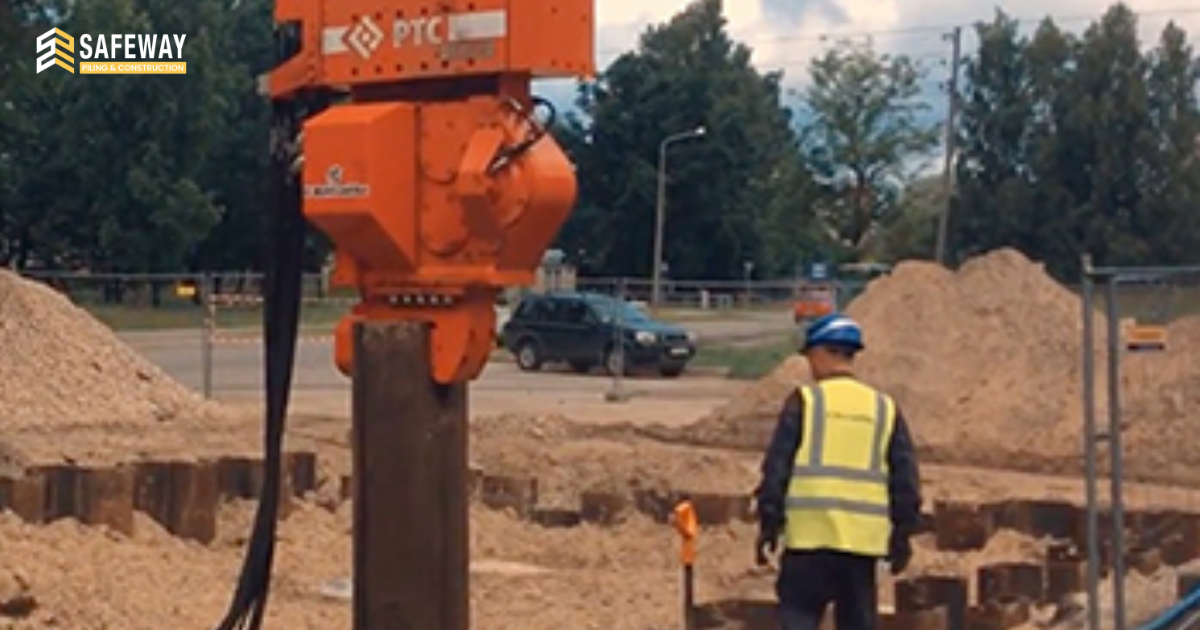
Vibratory hammer problems can make sheet pile installation slow and difficult. During a project, the machine may lose driving power, develop hydraulic issues, produce unusual noise, or fail to hold the sheet pile properly. Sometimes, a sheet pile may also get stuck in the ground or move away from its correct position. These problems can delay work and increase project costs.
For engineers and construction workers, knowing how to identify these problems is important. A small issue can become a bigger problem if the team ignores it or keeps running the machine without checking the cause. In this guide, Safeway Piling explains common vibratory hammer problems, why they happen, and how site teams can deal with them safely.
What Is a Vibratory Hammer?
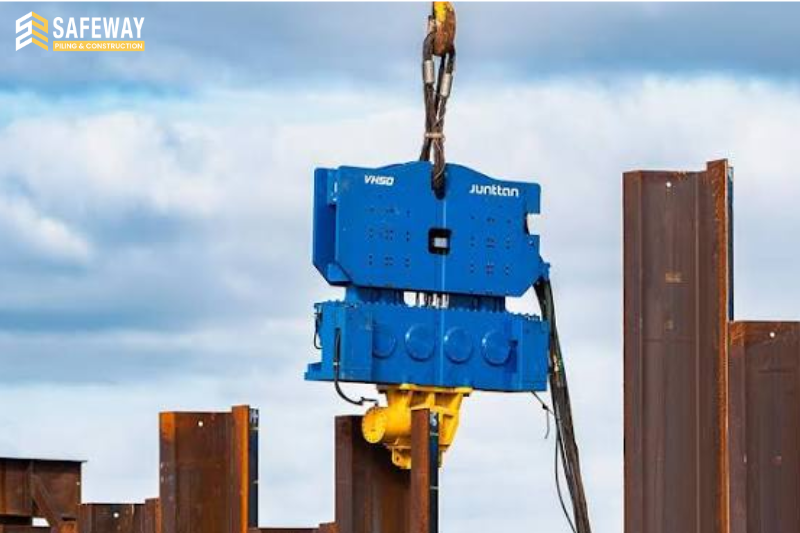
A vibratory hammer is a machine used to drive steel sheet piles into the ground and remove them when needed. It creates rapid vibrations that help reduce the resistance between the sheet pile and the surrounding soil. This allows the pile to move into the ground more easily in suitable soil conditions. The machine uses a clamp to hold the sheet pile and a vibration system to help drive it down. Its performance depends on the machine capacity, sheet pile size, soil type, and installation method.
Why Do Vibratory Hammer Problems Occur?
Vibratory hammer problems can happen for several reasons. The machine may not be suitable for the ground conditions, or some parts may be worn out from regular use. Poor maintenance, incorrect machine settings, and operator mistakes can also affect performance. Sometimes, the problem is not with the machine itself. Hard soil, buried concrete, or other underground obstacles can make sheet pile driving difficult. Finding the real cause helps the team choose the right solution and avoid unnecessary delays.
Common Vibratory Hammer Problems During Sheet Pile Driving
During sheet pile installation, the machine and the ground must work together properly. If something goes wrong, the operator may notice one or more of the following problems.
- Weak Driving Power: The vibratory hammer may run normally but fail to drive the sheet pile at the expected speed. This can happen when the machine is too small for the job or the soil offers strong resistance. The team should check the machine condition, pile size, and soil information before deciding what to do next.
- Hydraulic System Problems: Many vibratory hammers use hydraulic power to operate. If the oil level is low, a hose is damaged, or a filter is blocked, the machine may not work properly. Oil leaks and unusual pressure readings should be checked by trained personnel before the machine is used again.
- Clamp Not Holding the Sheet Pile Properly: The clamp must hold the sheet pile securely during driving. If the grip is weak, the pile may slip or become difficult to control. Worn gripping parts, an unsuitable clamp, or a mechanical fault may cause this problem. The operator should stop the machine and check the clamp before continuing.
- Too Much or Unusual Vibration: Some vibration is normal because it is part of how the machine works. However, a sudden change in vibration may point to a mechanical problem or unsuitable operating conditions. Strong ground vibration can also affect nearby buildings or structures. The team should check the machine and site conditions if the vibration becomes unusual.
- Sheet Pile Moving Out of Position: A sheet pile may start leaning or move away from its planned line during installation. This can happen when the pile is not positioned correctly at the beginning or when the soil resistance changes. Checking the pile’s position during driving helps the team find alignment problems early.
- Sheet Pile Getting Stuck: Sometimes, the sheet pile stops moving into the ground even when the hammer is running. Dense soil, gravel, buried objects, or high resistance between the pile and soil may be the cause. The team should investigate why the pile has stopped instead of simply applying more force.
- Machine Overheating: A vibratory hammer or its hydraulic system may become too hot during operation. Low oil levels, poor cooling, heavy workloads, or mechanical faults can cause overheating. The operator should follow the manufacturer’s instructions and stop the machine if the temperature reaches an unsafe level.
- Unusual Noise During Operation: A sudden knocking, grinding, or rattling sound may mean that a part is loose, worn, or damaged. The operator should not ignore a new or unusual sound. The machine should be checked by a qualified technician before work continues if a fault is suspected.
How to Solve Common Vibratory Hammer Problems
When a vibratory hammer develops a problem, the first step is to find out what is causing it. Trying random adjustments may make the situation worse. The following checks can help the site team understand the issue.
- Check the Machine: Look for visible damage, loose parts, warning signs, and changes in machine performance. Confirm that the hammer is suitable for the sheet pile and the job.
- Inspect the Hydraulic System: Check for oil leaks, damaged hoses, and other visible problems. Hydraulic pressure should be checked by trained personnel using the correct procedure.
- Check the Clamp: Make sure the clamp is suitable for the sheet pile and can hold it securely. Worn or damaged gripping parts should be repaired or replaced as required.
- Review the Soil Conditions: If the sheet pile stops moving, check the available soil investigation report and installation records. Hard soil or an underground obstruction may be responsible.
- Check Sheet Pile Alignment: Make sure the pile is still following the planned line and angle. If it begins to lean, find the cause and correct the setup before continuing.
- Ask a Qualified Technician for Help: If the problem continues or the cause is unclear, stop the work when necessary and arrange a proper inspection. Always follow the manufacturer’s instructions when making adjustments or repairs.
How Soil Conditions Affect Vibratory Hammer Performance
Soil conditions play a major role in sheet pile driving. Loose sand may allow the pile to enter the ground more easily, while dense sand, gravel, or stiff clay may create greater resistance. Underground concrete, old foundations, and other buried objects can also stop a sheet pile from moving. This is why engineers should study the soil conditions before choosing the installation method. If a pile stops moving during driving, the team should check the available site information and investigate the cause before deciding how to continue.
How to Prevent Vibratory Hammer Problems
Regular care can help reduce machine problems and keep sheet pile work running smoothly. A simple inspection before starting work can help the team find small issues before they cause delays.
- Inspect the Machine Before Use: Check the clamp, hoses, connections, bolts, and visible parts for damage or looseness.
- Check Hydraulic Oil: Keep the oil at the correct level and use the type recommended by the manufacturer. Look for leaks or signs of contamination.
- Maintain the Clamp: Check the gripping parts regularly to make sure they can hold the sheet pile safely.
- Follow the Service Schedule: Carry out maintenance at the recommended times. Keep a record of inspections, repairs, and machine operating hours.
- Use Trained Operators: Operators should understand how to run the machine, recognise warning signs, and follow safe working procedures.
- Choose the Right Equipment: Select a vibratory hammer based on the sheet pile, soil conditions, required depth, and project needs.
Safety Precautions During Vibratory Hammer Operation
Safety should always come first when using or checking a vibratory hammer. The machine creates strong forces and can be dangerous if it is not handled properly. Workers should follow the site safety plan and the manufacturer’s instructions throughout the installation process.
- Stop the Machine Before Inspection: Shut down and isolate the equipment according to the approved procedure before checking or repairing it.
- Keep a Safe Distance: Keep workers away from moving parts, suspended loads, and areas where the sheet pile could move unexpectedly.
- Wear Proper Safety Equipment: Use the required safety helmet, footwear, hearing protection, eye protection, and other personal protective equipment.
- Check the Work Area: Make sure the ground is suitable for the equipment and that nearby workers and structures are protected from possible hazards.
- Never Force a Stuck Sheet Pile: Find out why the pile has stopped moving before choosing a corrective method. Uncontrolled force may damage the pile or equipment.
- Use Qualified Technicians: Hydraulic, electrical, and mechanical repairs should be handled by trained personnel.
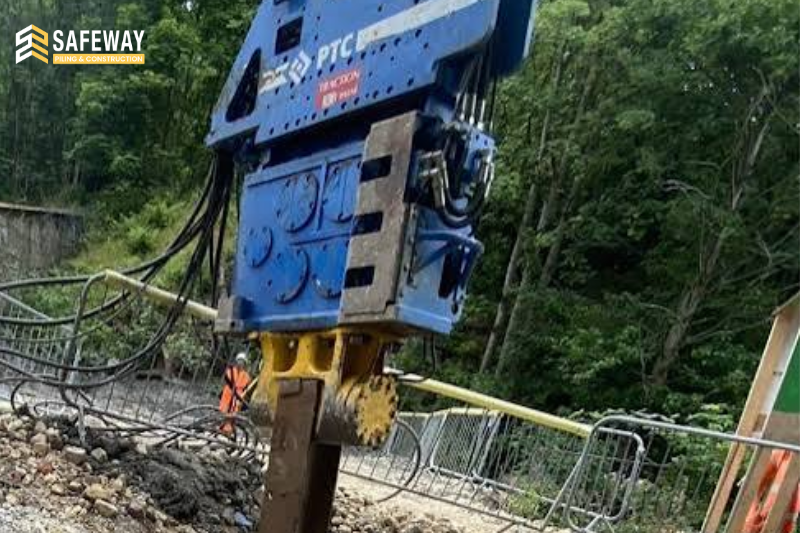
When Should You Stop Sheet Pile Driving?
The operator should stop the machine if something does not seem right or the work becomes unsafe. For example, a hydraulic oil leak, damaged clamp, sudden loss of driving power, unusual noise, or unexpected vibration may indicate a fault. The team should also stop and investigate if a sheet pile suddenly refuses to move. Continuing without checking the cause can damage the equipment or create safety risks. Work should restart only after the problem has been checked and the site team has confirmed that it is safe to continue.
How Safeway Piling Helps With Sheet Pile Installation
Successful sheet pile installation needs proper planning, suitable equipment, and careful work on site. Safeway Piling recognizes the importance of considering soil conditions, sheet pile size, installation depth, and nearby structures before work begins. These details help engineers and contractors choose a suitable installation approach and prepare for possible challenges. For sheet pile projects, discussing the site requirements with an experienced piling team can help identify equipment needs and reduce avoidable installation problems.
Conclusion
Vibratory hammer problems can slow down sheet pile driving and increase construction costs. Common issues include weak driving power, hydraulic faults, clamp problems, unusual vibration, overheating, and sheet piles getting stuck. Many of these problems can be reduced through regular maintenance, proper equipment selection, and careful site planning. When an issue occurs, the team should find the cause before trying to fix it. With the right checks and safe working methods, contractors can reduce delays and keep sheet pile installation on track.
Frequently Asked Questions
What are the most common vibratory hammer problems?
The most common problems include weak driving power, hydraulic issues, a faulty clamp, overheating, unusual noise, excessive vibration, and sheet piles getting stuck in the ground.
Why is my vibratory hammer not driving the sheet pile properly?
The machine may not be suitable for the soil or sheet pile, or it may have a mechanical or hydraulic fault. Dense soil and underground obstacles can also make driving difficult.
How can I prevent vibratory hammer problems?
Inspect the machine before use, maintain the hydraulic system, check the clamp, follow the service schedule, and make sure trained operators handle the equipment.
Can hard soil damage a vibratory hammer?
Hard soil can increase resistance and make driving more difficult. If the machine is used outside its operating limits, equipment damage may occur. The team should assess the soil conditions and follow the manufacturer’s guidance.
Why does a sheet pile get stuck during driving?
A sheet pile may get stuck because of dense soil, gravel, buried objects, or high resistance around the pile. The cause should be checked before work continues.
When should a vibratory hammer be inspected?
The machine should be inspected before use and whenever there is a sudden change in performance, unusual noise, oil leakage, clamp damage, or another sign of a possible fault.