
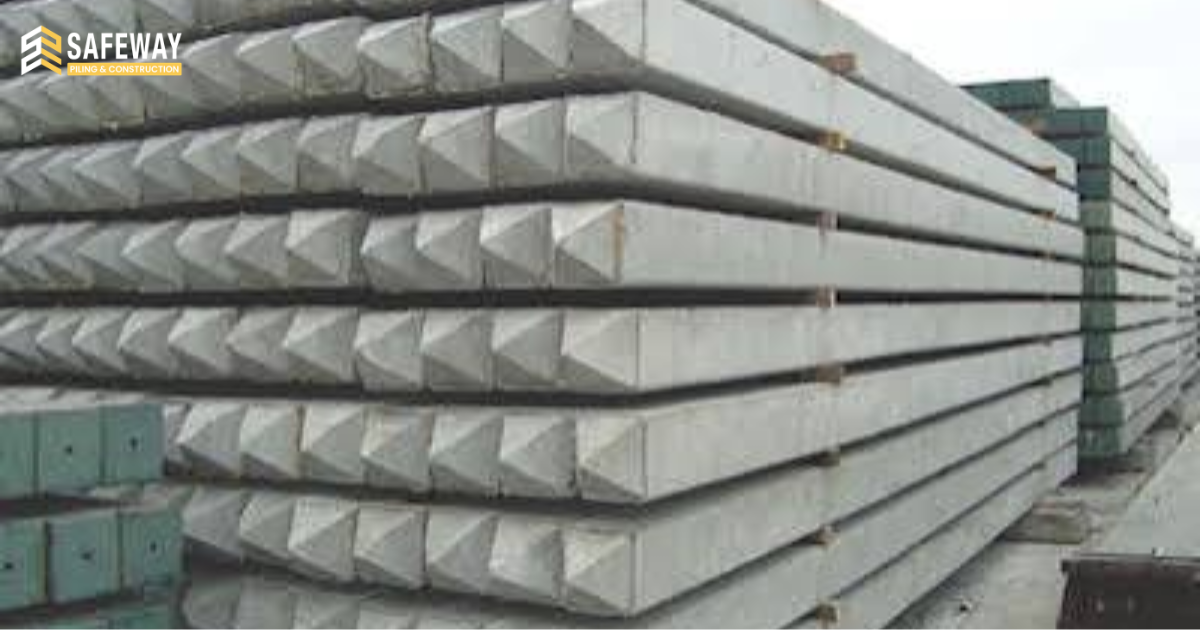
Precast pile casting methods are used to manufacture concrete piles before they are transported to a construction site for foundation installation. The process includes several important stages, such as mold preparation, reinforcement placement, concrete mixing, casting, compaction, curing, inspection, and storage. Each stage needs proper control because the quality of the finished pile affects its strength, handling, transportation, and installation.
Precast piles are manufactured in a controlled casting yard or production facility instead of being cast directly inside the ground. This allows better control over the pile dimensions, reinforcement, concrete quality, and curing process. Proper formwork, reinforcement, casting, curing, and handling are important parts of precast concrete pile production.
What Are Precast Pile Casting Methods?
Precast pile casting methods are the techniques used to produce concrete piles before they are installed into the soil. The selected method depends on the pile size, shape, length, reinforcement arrangement, concrete grade, production equipment, and project requirements. Different production systems can be used for reinforced concrete piles, prestressed piles, solid piles, and hollow piles.
The main purpose of these methods is to produce piles with the required dimensions, strength, durability, and structural performance. A properly prepared mold controls the pile shape, while reinforcement provides the required structural support. Concrete placement and compaction help create a dense pile, while proper curing allows the concrete to develop the required strength before handling and installation.
Some common methods include reinforced concrete casting, prestressed concrete casting, horizontal mold casting, vertical casting, and centrifugal casting for suitable pile types. The production method should match the approved engineering design and project requirements.
Why Are Proper Precast Pile Casting Methods Important?
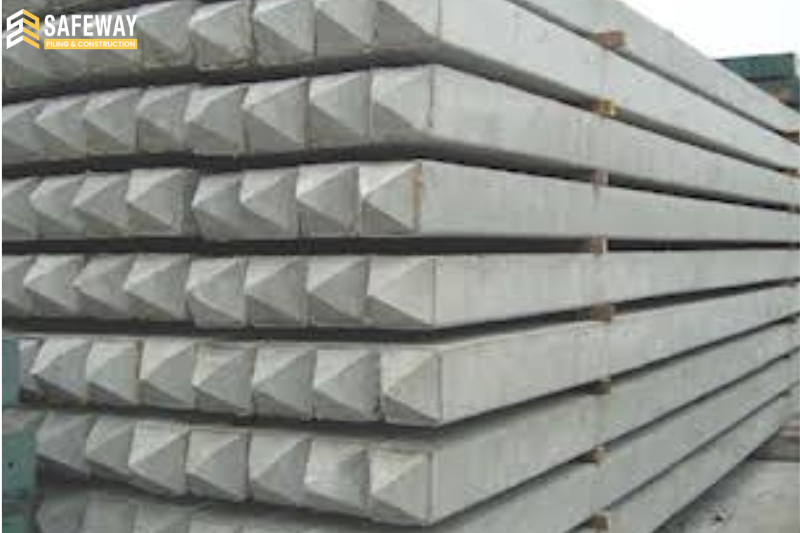
The casting method has a direct effect on the quality of a precast pile. A pile must withstand several stages after casting, including lifting, storage, transportation, and installation. If the mold is not properly aligned, reinforcement is incorrectly placed, or concrete is poorly compacted, defects may develop in the finished pile.
Controlled production provides better opportunities to inspect the pile before it reaches the construction site. The production team can check the mold dimensions, reinforcement arrangement, concrete quality, curing condition, surface finish, and final dimensions. This type of controlled production helps maintain consistency when many piles are required for a large foundation project.
Proper casting methods can provide:
- Consistent pile dimensions
- Better concrete quality
- Proper reinforcement placement
- Improved strength development
- Better surface quality
- Easier quality inspection
- Safer handling and transportation
Precast Pile Casting Solutions by Safeway Piling & Construction
Safeway Piling & Construction provides precast piling solutions in Bangladesh along with other piling services. The company states that it offers tailored precast piling solutions using modern technology and supports piling work for different construction requirements.
Precast pile work requires proper coordination between pile design, reinforcement, concrete casting, curing, transportation, and installation. The required pile length, size, concrete grade, reinforcement, and installation method should be selected according to the approved project design.
Proper planning before production can help reduce casting problems and delays during installation. The production method should also consider how the finished pile will be lifted, transported, stored, and installed at the project site.
How Is the Mould Prepared for Precast Pile Casting?
Mould preparation is one of the first stages of precast pile casting. The mold controls the final shape and dimensions of the pile, so it needs to be strong, clean, properly aligned, and securely fixed before concrete is placed. The mold should be able to withstand the pressure and vibration created during concrete placement without changing its shape.
Before casting, the mold is checked for damage, deformation, alignment, joints, and dimensions. Its internal surface should be clean and free from materials that could affect the concrete surface. A suitable release agent can be used where required to make demoulding easier and reduce damage to the finished pile.
Important mold requirements include:
- Correct pile dimensions
- Proper alignment
- Clean internal surfaces
- Adequate rigidity
- Secure joints and connections
- Suitable release treatment
How Is Reinforcement Prepared for Precast Piles?
Reinforcement provides important structural support to reinforced concrete piles. It also helps the pile withstand stresses that can occur during lifting, transportation, handling, and installation. The size, number, spacing, shape, and arrangement of reinforcement should follow the approved engineering drawings.
The reinforcement bars are normally cut and bent before being assembled into a reinforcement cage. The cage must be positioned correctly inside the mold so that the required concrete cover is maintained. Suitable spacers can be used to keep the reinforcement away from the mould surface. Careful placement is important because incorrect reinforcement position can affect the finished pile.
The main reinforcement work includes:
- Cutting and bending reinforcement bars
- Assembling the reinforcement cage
- Checking bar spacing
- Maintaining required concrete cover
- Securing the reinforcement cage
- Checking the cage before concrete placement
How Is Concrete Prepared for Precast Pile Casting?
Concrete quality is one of the most important parts of precast pile production. The concrete should be prepared according to the approved mix design and project requirements. Cement, aggregates, water, and approved admixtures need to be properly measured and mixed to achieve consistent concrete properties.
Fresh concrete should be handled carefully during transportation and placement so that segregation does not occur. It should be placed properly around the reinforcement and compacted using a suitable method. Good consolidation helps reduce trapped air and improves the density of the concrete. Proper control during mixing, placement, and compaction helps produce a more uniform finished pile.
The concrete process normally includes:
- Proper batching of materials
- Controlled mixing
- Checking fresh concrete condition
- Careful transportation
- Controlled placement
- Proper compaction
How Is Concrete Placed in the Pile Mould?
After the mold and reinforcement are ready, fresh concrete is placed inside the mold. The concrete should be distributed properly so that it fills the mold and surrounds the reinforcement. Care should be taken during placement because uncontrolled handling can cause segregation or leave areas that are not properly filled.
Compaction is carried out during or after concrete placement using a suitable method. Vibration helps remove trapped air and allows concrete to fill around reinforcement and other parts of the mold. Once the mold is completely filled, the exposed surface is finished according to the project requirements. The pile is then prepared for the selected curing method.
What Are the Main Precast Pile Curing Methods?
Curing is an important stage because concrete needs suitable moisture and temperature conditions to develop strength. After casting, the pile should be protected from excessive moisture loss and unsuitable environmental conditions. The selected curing method depends on the concrete mix, production system, required strength, and project specifications.
Different curing methods can be used for precast concrete production. These may include moist curing, water curing, steam curing, and other controlled curing systems. Accelerated curing can also be used in some production facilities when the process is properly designed and controlled. Curing should begin at the appropriate stage and continue according to the approved requirements.
Common curing methods include:
- Water Curing: Keeps the concrete moist during the required curing period.
- Moist Curing: Helps prevent excessive moisture loss from the concrete.
- Steam Curing: Uses controlled steam to accelerate strength development where suitable.
- Controlled Temperature Curing: Maintains suitable temperature conditions during strength development.
- Curing Compound: Can be used where approved by the project requirements.
What Factors Affect Precast Pile Casting Methods?
The most suitable casting method depends on the design and production requirements of the pile. A method suitable for a short reinforced concrete pile may not be suitable for a long prestressed pile or a specialized hollow pile. The production facility must consider the available moulds, reinforcement system, concrete equipment, curing system, and lifting equipment.
Pile dimensions are also important because long and heavy piles require suitable casting beds, moulds, lifting systems, and storage arrangements. The installation method should also be considered because the pile needs enough strength to withstand transportation and driving stresses. For large projects, the casting method should provide consistent production without reducing quality.
Important factors include:
- Pile length and size
- Pile shape
- Concrete grade
- Reinforcement arrangement
- Mould type
- Production quantity
- Curing system
- Handling requirements
- Transportation requirements
- Installation method
How Is the Precast Pile Casting Process Completed?
The casting process follows a planned sequence so that each stage can be checked before moving to the next stage. Proper sequencing helps reduce production errors and supports consistent quality. The exact process can change depending on the pile type and production system, but the main stages generally remain similar.
- Review the Pile Design: The first step is to confirm the required pile dimensions, length, concrete grade, reinforcement, lifting requirements, and other specifications from the approved design.
- Prepare the Casting Area: The casting area should be clean, level, organized, and ready for moulds, reinforcement, concrete materials, tools, and equipment.
- Prepare the Mould: Clean and inspect the mould before use and check its dimensions, alignment, joints, and overall condition.
- Apply Release Agent: Apply a suitable release agent to the mould surface where required so the finished pile can be removed without unnecessary damage.
- Prepare the Reinforcement: Cut, bend, and assemble the reinforcement according to the approved reinforcement details.
- Place the Reinforcement Cage: Carefully position the reinforcement cage inside the mould and use suitable spacers to maintain the required concrete cover.
- Check the Mould and Reinforcement: Inspect the mould alignment, reinforcement position, dimensions, and cover before starting concrete placement.
- Prepare the Concrete: Batch and mix the concrete materials according to the approved mix design and project requirements.
- Place the Concrete: Place fresh concrete into the mould in a controlled manner and make sure it properly surrounds the reinforcement.
- Compact the Concrete: Use suitable vibration or another approved consolidation method to remove trapped air and improve concrete density.
- Finish the Concrete Surface: Finish the exposed surface according to the required specification and add identification marks if needed.
- Start the Curing Process: Apply the selected curing method and maintain suitable moisture and temperature conditions for strength development.
- Inspect the Finished Pile: Check the pile for dimensions, surface condition, visible cracks, honeycombing, and other defects after the required curing stage.
- Demould the Pile: Remove the pile from the mould carefully after it reaches the required handling strength.
- Store the Pile Properly: Place the finished pile on suitable supports and arrange it safely to prevent damage during storage.
- Prepare for Transportation: Check the pile and lifting points before loading and arrange suitable lifting equipment and transportation.
- Transport the Pile: Move the approved pile to the construction site while protecting it from excessive impact or damage during transportation.
- Prepare for Installation: Inspect the pile again at the site and prepare it for the planned driving or installation method.
Where Are Precast Piles Used?
Precast piles can be used for many types of deep foundation projects. They are useful where piles need to be manufactured in advance and then transported to the construction site for installation. Their application depends on the structural design, soil conditions, required pile capacity, pile dimensions, and installation method.
They can support buildings and infrastructure where shallow foundations are not suitable for the required loads or ground conditions. Precast piles are also used in bridge and marine-related foundation work. The final application should always be selected based on engineering design and site conditions.
Common applications include:
- Residential buildings
- Commercial buildings
- High-rise structures
- Industrial buildings
- Warehouses
- Bridges
- Flyovers
- Infrastructure projects
- Marine structures
- Foundations on weak soil
How Can You Improve Precast Pile Casting Quality?
Good quality depends on controlling the complete production process rather than checking only the finished pile. The mould, reinforcement, concrete, compaction, curing, storage, and handling stages should all receive proper attention. Regular inspection can help identify problems early and reduce the chance of defective piles reaching the construction site.
Quality records are also useful for large projects. Details such as casting dates, concrete batches, reinforcement inspections, curing conditions, pile dimensions, and testing results can help maintain production consistency. Proper inspection before transportation is especially important because damaged piles may create problems during handling or installation.
The main quality control areas are:
- Mould inspection
- Reinforcement inspection
- Concrete quality control
- Compaction control
- Curing control
- Dimensional inspection
- Surface inspection
- Proper storage and handling
Benefits of Proper Precast Pile Casting Methods
A properly controlled casting method can provide better consistency throughout the production process. Since piles are manufactured before installation, the production team can inspect their dimensions, reinforcement, concrete quality, and surface condition before they are transported to the project site.
Precast production can also help organize foundation work for projects that require a large number of piles. Piles can be manufactured according to the project schedule and stored until they are needed. Proper coordination between production, transportation, and installation can help reduce delays and improve site productivity.
The main benefits include:
- Consistent pile quality
- Accurate dimensions
- Controlled concrete production
- Better strength development
- Improved durability
- Easier quality inspection
- Better production planning
- Reduced site casting work
- Efficient installation
- Suitable for large projects
Safety During Precast Pile Casting
Safety is important because precast pile production involves heavy reinforcement, concrete, moulds, lifting equipment, cranes, and finished piles. Workers need to follow suitable safety procedures during mould preparation, reinforcement work, concrete placement, demoulding, lifting, and transportation.
Finished piles can be heavy and difficult to handle, so suitable lifting equipment should be used by trained workers. The storage area should also be stable and properly arranged. During transportation and handling, piles should be supported correctly to reduce the risk of cracking, impact, or other damage.
Important safety practices include:
- Use required personal protective equipment.
- Inspect cranes, lifting equipment, and lifting accessories.
- Secure moulds before concrete placement.
- Handle reinforcement with suitable tools and procedures.
- Keep the casting and storage areas organized.
- Use safe lifting points and lifting methods.
- Store piles on stable supports.
- Control vehicle and crane movement.
- Inspect piles before transportation.
- Follow safe demoulding procedures.
Why Choose Safeway Piling & Construction for Precast Pile Solutions?
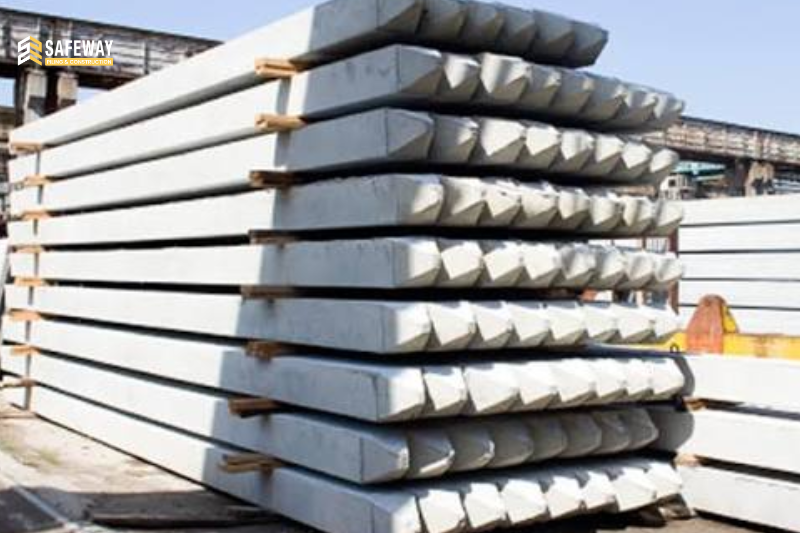
Safeway Piling & Construction provides precast pile services in Bangladesh and states that it offers tailored precast piling solutions using modern technology. The company also provides other piling services, including sheet piles, cast-in-situ piles, PHC piles, and sand piles.
Precast pile work requires proper coordination between design, production, transportation, and installation. The pile should be manufactured according to the required specifications and should be suitable for the planned installation method. Good planning can help reduce production problems and improve coordination between the casting facility and construction site.
Safeway Piling & Construction focuses on piling and foundation solutions for different construction requirements. Contractors and project owners can discuss their project requirements, pile specifications, foundation conditions, transportation needs, and installation requirements to plan a suitable solution.
Contact Safeway Piling & Construction for Precast Pile Solutions
If your project requires Precast Pile Casting Methods, proper planning is important from mould preparation and reinforcement to concrete casting, curing, transportation, and installation. Selecting the right production method can help maintain pile quality and support efficient foundation work.
Contact Safeway Piling & Construction to discuss your precast pile requirements and receive project-based piling guidance and a quotation.
Phone: 01841980452
Email: info@safewaypiling.com
Conclusion
Precast Pile Casting Methods provide a controlled way to manufacture concrete piles before they are transported and installed at a construction site. Mould preparation, reinforcement placement, concrete casting, compaction, curing, inspection, and proper handling all play important roles in producing reliable precast piles.
The right casting method depends on pile dimensions, reinforcement, concrete requirements, production quantity, curing system, handling requirements, and installation method. Proper quality control throughout production can help reduce defects and maintain consistent pile quality.
For projects that require precast pile solutions, proper coordination between casting, transportation, and installation is important. Safeway Piling & Construction provides precast piling solutions in Bangladesh and can support contractors and project owners with their piling requirements.
Frequently Asked Questions
1. What are Precast Pile Casting Methods?
Precast Pile Casting Methods are techniques used to manufacture concrete piles before they are transported to a construction site. The process can include mould preparation, reinforcement placement, concrete casting, compaction, curing, inspection, and storage.
2. Why is mould preparation important for precast piles?
Mould preparation helps maintain the required pile dimensions, shape, alignment, and surface quality. A properly prepared mould also helps make the demoulding process easier and reduces the chance of damage to the finished pile.
3. Why is reinforcement used in precast piles?
Reinforcement provides structural support and helps the pile resist stresses during handling, transportation, installation, and service. The reinforcement arrangement should follow the approved engineering design.
4. Why is concrete compaction important?
Concrete compaction helps remove trapped air and improves the density of the concrete. Proper consolidation can help reduce voids and other defects in the finished pile.
5. Why is curing important for precast piles?
Curing provides suitable moisture and temperature conditions for concrete strength development. Proper curing helps the concrete reach the required strength before the pile is handled and installed.
6. What curing methods can be used for precast piles?
Water curing, moist curing, steam curing, controlled temperature curing, and approved curing compounds can be used depending on the concrete mix and production system.
7. Can precast piles be prestressed?
Yes. Some precast piles are manufactured using prestressing techniques. These piles require specialized production equipment and carefully controlled procedures.
8. How is precast pile quality checked?
Quality can be checked through mould inspection, reinforcement inspection, concrete testing, curing control, dimensional checks, surface inspection, and other tests required by the project specifications.
9. Where are precast piles commonly used?
Precast piles can be used for residential and commercial buildings, high-rise structures, industrial facilities, warehouses, bridges, flyovers, marine structures, and other infrastructure projects.
10. Can Safeway Piling & Construction provide precast pile solutions?
Yes. Safeway Piling & Construction provides precast piling solutions in Bangladesh and can discuss project-specific piling requirements with contractors and project owners.
One Response