
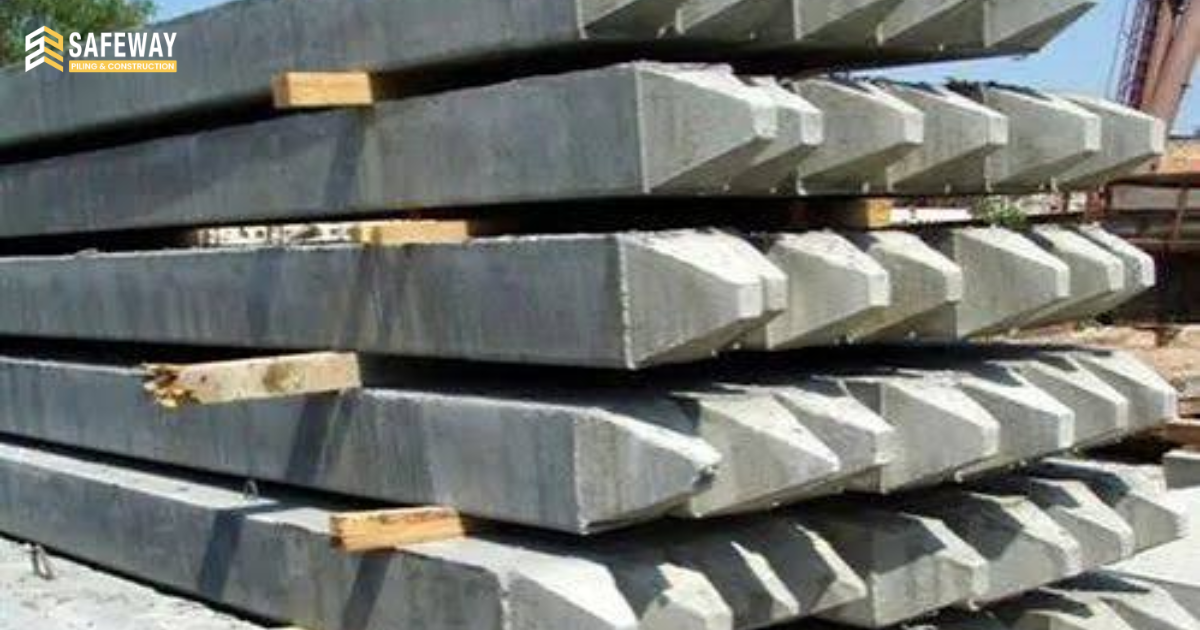
Precast pile reinforcement plays an important role in producing strong and durable precast concrete piles for foundation projects. Reinforcement helps the pile resist bending, tension, handling stresses, and other forces during transportation and installation.
The reinforcement arrangement depends on the pile size, length, design load, concrete strength, soil condition, installation method, and project requirements. Engineers should prepare reinforcement based on structural calculations instead of using the same arrangement for every precast pile.
Safeway Piling & Construction provides precast pile solutions for construction and foundation projects in Bangladesh. The company can support project owners, contractors, and consultants with precast pile requirements, technical guidance, supply, and project planning.
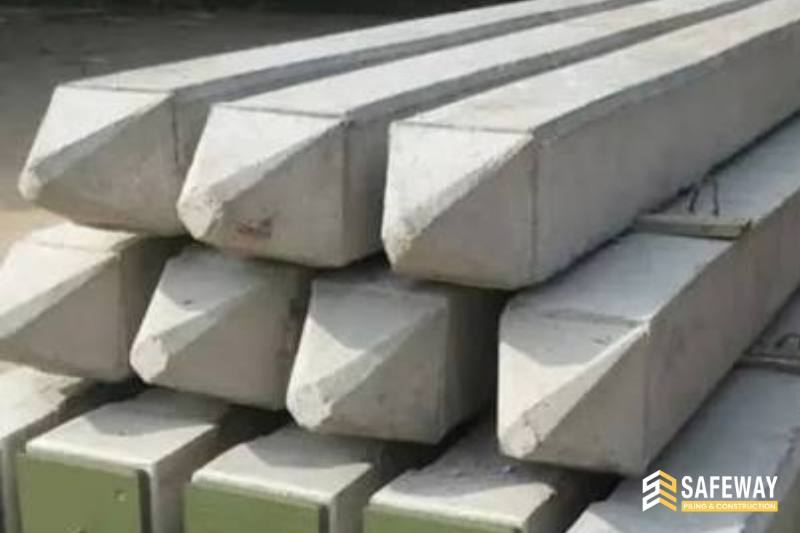
What Is Precast Pile Reinforcement?
Precast Pile Reinforcement refers to the steel reinforcement placed inside a precast concrete pile before concrete casting. The reinforcement works with the concrete to provide the required strength and structural performance.
A precast pile normally contains longitudinal reinforcement along its length and transverse reinforcement such as ties, links, or spirals. These reinforcement components help maintain the shape and stability of the pile during casting, handling, transportation, and installation.
The reinforcement cage must remain in the correct position during concrete placement. Spacers and supports help maintain the required concrete cover between the steel and the outer surface of the pile.
Why Is Precast Pile Reinforcement Important?
Precast pile reinforcement helps the pile handle different forces during construction and after installation. A precast pile may experience stress when workers lift it from the mold, move it to storage, transport it to the site, and install it into the ground.
Proper reinforcement also helps the pile resist bending and tension. It supports the concrete section and helps maintain the required structural performance under the design loads.
For driven precast piles, engineers should also consider stresses created during installation. Therefore, the reinforcement design should consider both permanent foundation loads and temporary construction conditions.
Precast Pile Solutions by Safeway Piling & Construction
Safeway Piling & Construction provides precast pile solutions for different foundation and construction requirements. The company considers project conditions before recommending a suitable pile solution.
Precast piles can have different shapes, sizes, lengths, concrete strengths, and reinforcement arrangements. The suitable reinforcement depends on the approved structural design and expected loads.
Safeway Piling & Construction can support contractors and project owners with precast pile supply, technical guidance, project consultation, and pricing information based on project requirements.
What Are the Main Components of Precast Pile Reinforcement?
Precast pile reinforcement normally consists of several steel components that work together inside the concrete section. These components help maintain the strength, stability, and shape of the pile during casting and construction.
Longitudinal Reinforcement: Longitudinal bars run along the main length of the pile. They provide the main reinforcement and help the pile resist bending and tensile stresses. The number and diameter of these bars depend on the structural design, pile size, design load, and expected ground conditions.
Transverse Reinforcement: Transverse reinforcement holds the longitudinal bars in their planned position. It can use ties, links, or spirals depending on the pile design. This reinforcement also helps maintain the shape of the reinforcement cage during concrete casting and handling.
Reinforcement Cage: The reinforcement cage consists of longitudinal bars and transverse reinforcement assembled together before concrete casting. Workers must secure the cage properly so it does not move during lifting or concrete placement.
Spacers and Supports: Spacers maintain the required distance between reinforcement steel and the mold surface. They help provide the specified concrete cover around the reinforcement and keep the cage properly positioned during casting.
What Factors Affect Precast Pile Reinforcement Design?
The reinforcement design changes from one project to another. Engineers should review the complete project conditions before preparing the reinforcement arrangement.
Pile Size: The width, diameter, or cross-section of the pile affects the available space for reinforcement and the arrangement of the reinforcement cage.
Pile Length: Longer piles may experience different bending and handling stresses. The reinforcement should therefore match the design requirements and expected construction conditions.
Design Load: Axial load, bending, tension, and other expected forces affect the amount and arrangement of reinforcement required in the pile.
Soil Condition: Soil resistance and ground movement can affect the forces acting on the pile. Engineers should consider the soil report and foundation design when preparing reinforcement requirements.
Installation Method: Driven piles can experience impact and handling stresses during installation. The reinforcement design should consider these temporary stresses where applicable.
Concrete Strength: The selected concrete strength works together with the reinforcement to provide the required structural performance.
Environmental Conditions: Groundwater, moisture, chemicals, and other exposure conditions can affect durability and concrete cover requirements.
Handling Requirements: Lifting, transportation, stacking, and storage can create temporary stresses in precast piles. The reinforcement and lifting arrangement should account for these conditions.
Pile Connection: The pile head may require suitable reinforcement detailing for connection with a pile cap or other foundation element.
Project Standards: Reinforcement must follow the approved structural drawings, applicable design codes, and project specifications.
How Is Precast Pile Reinforcement Designed?
The reinforcement design starts with the structural requirements of the project. Engineers review the foundation design, pile dimensions, expected loads, soil conditions, concrete strength, and installation method.
They then determine the required reinforcement arrangement and check whether the pile can safely resist the expected forces. The design should also consider handling and lifting because precast piles are moved before installation.
The reinforcement should be accurately located and securely supported before concrete placement. Approved drawings should clearly show reinforcement position, spacing, cover, and other important requirements.
Reinforcement requirements should not be copied from another project because different pile sizes, loads, soil conditions, and installation methods can require different designs. Technical guidance for deep foundation reinforcement also treats longitudinal and transverse reinforcement as design-dependent elements.
How Is the Precast Pile Reinforcement Cage Prepared?
The reinforcement cage is normally prepared before concrete is placed into the mould. Workers cut, bend, arrange, and fix reinforcement according to the approved drawings.
Bar Cutting: Reinforcement bars are cut to the required lengths based on the approved reinforcement schedule.
Bar Bending: Where bending is required, workers bend the reinforcement according to the specified shape and dimensions.
Bar Arrangement: Longitudinal bars are placed in their required positions, and transverse reinforcement is fixed around them.
Cage Assembly: Workers connect the reinforcement bars to form a stable cage that can maintain its shape during lifting and concrete casting.
Cage Inspection: The completed cage should be checked for bar quantity, spacing, dimensions, connections, and overall alignment before it enters the mould.
How Is Concrete Cover Maintained in Precast Piles?
Concrete cover is the distance between the outer surface of the concrete and the reinforcement steel. It protects the reinforcement from environmental exposure and helps maintain the durability of the pile.
The required cover should come from the approved structural drawings and applicable project standards. Workers use suitable spacers and supports to maintain this distance during casting.
Use Suitable Spacers: Spacers should hold the reinforcement at the required distance from the mould surface.
Maintain Cage Position: The reinforcement cage should remain centered and stable while workers place and compact the concrete.
Check Cover Before Casting: Workers should inspect the cage and spacers before concrete placement begins.
Avoid Cage Movement: The reinforcement should be properly secured so vibration and concrete placement do not move the cage from its planned position.
How Is Precast Pile Reinforcement Installed in the Mould?
After preparing the mould, workers position the reinforcement cage inside it. They check the cage location from all sides to make sure the required concrete cover remains available.
The cage should not touch the mould. Suitable spacers support the reinforcement and keep it at the planned position.
Workers should also check the reinforcement at the pile ends because the pile head and toe may require specific reinforcement arrangements. The reinforcement must remain secure before concrete placement begins.
How Is Precast Pile Reinforcement Checked Before Casting?
Before casting, workers should inspect the reinforcement cage carefully. This inspection helps identify incorrect bar sizes, spacing problems, loose connections, insufficient cover, and cage alignment issues.
Bar Size: Confirm that the reinforcement bar sizes match the approved structural drawings. The correct bar diameter is important for maintaining the required strength of the pile. Using the wrong bar size can affect the designed reinforcement arrangement and structural performance.
Bar Quantity: Check that the required number of longitudinal and transverse reinforcement bars is present. Count the bars carefully before placing the reinforcement cage inside the mould. Missing bars can change the reinforcement capacity of the precast pile.
Spacing: Verify the spacing of longitudinal and transverse reinforcement. Correct spacing helps maintain the planned reinforcement arrangement throughout the pile. Workers should compare the actual spacing with the approved reinforcement drawings before casting.
Cage Position: Make sure the cage is correctly positioned inside the mould. The reinforcement cage should remain stable and properly aligned during concrete placement. Incorrect cage position can cause uneven concrete cover and affect the finished pile.
Concrete Cover: Check that spacers provide the required concrete cover. Proper cover helps protect the reinforcement from moisture and environmental exposure. Workers should inspect the spacers before casting to make sure they will keep the cage in the required position.
Connections: Check that reinforcement is securely tied or connected. Proper connections help prevent the reinforcement cage from moving during lifting and concrete placement. Loose connections can cause changes in bar spacing and cage alignment.
Pile Ends: Inspect reinforcement details at the pile head and toe. These areas may require specific reinforcement arrangements according to the structural design. Check the pile ends carefully before casting to avoid construction problems later.
Cleanliness: Remove dirt, loose material, oil, and other contaminants that may affect concrete bonding. Clean reinforcement helps maintain proper contact between the steel and surrounding concrete. Workers should complete this check before the reinforcement cage enters the mould.
How Is the Precast Pile Casting Process Completed?
The reinforcement is only one part of the complete precast pile production process. Workers need to prepare the mould, reinforcement, concrete, casting equipment, curing system, and handling arrangement before production starts.
- Review the Pile Design: Check the approved drawings for pile dimensions, reinforcement requirements, concrete specifications, lifting points, and installation requirements.
- Prepare the Casting Area: Keep the casting area clean, level, organized, and suitable for safe pile production.
- Prepare the Mould: Clean the mould and check its dimensions, alignment, joints, and condition before placing reinforcement.
- Apply Release Agent: Apply a suitable release agent to the mould so the finished pile can be removed without unnecessary damage.
- Prepare the Reinforcement: Cut, bend, arrange, and assemble the reinforcement according to the approved reinforcement drawings.
- Build the Reinforcement Cage: Fix the longitudinal and transverse reinforcement together to form a stable cage.
- Install Spacers: Place suitable spacers at the required locations to maintain the specified concrete cover.
- Place the Cage: Position the reinforcement cage accurately inside the mould and check its alignment.
- Inspect the Reinforcement: Check bar size, quantity, spacing, cover, cage position, and connections before casting.
- Prepare the Concrete: Produce concrete according to the approved mix design and project requirements.
- Place the Concrete: Place concrete carefully into the mould so it surrounds the reinforcement cage properly.
- Compact the Concrete: Use a suitable compaction method to reduce air voids and achieve proper concrete consolidation.
- Finish the Surface: Finish the exposed concrete surface and check the pile dimensions.
- Start Curing: Apply the approved curing method to allow the concrete to gain the required strength.
- Inspect the Finished Pile: Check the pile for cracks, surface defects, dimensions, and other quality issues.
- Demould the Pile: Remove the mould carefully after the concrete reaches the required condition for demoulding.
- Store the Pile Properly: Place the pile on suitable supports and avoid unsafe stacking or handling.
- Prepare for Installation: Inspect the pile before transportation and installation to make sure it meets the project requirements.
What Are Common Precast Pile Reinforcement Problems?
Reinforcement problems can affect the quality and performance of precast piles. These problems may occur when workers do not follow the approved drawings or fail to check the reinforcement cage before casting.
Incorrect Bar Spacing: Incorrect spacing can change the designed reinforcement arrangement and may affect structural performance.
Insufficient Concrete Cover: Inadequate cover can reduce the protection provided to the reinforcement and may affect long-term durability.
Loose Reinforcement: Poorly secured reinforcement can move during concrete placement and compaction.
Incorrect Bar Size: Using reinforcement with the wrong diameter can result in a pile that does not match the approved design.
Damaged Reinforcement: Bent, damaged, or heavily corroded reinforcement may not meet the project requirements.
Poor Cage Alignment: An incorrectly aligned reinforcement cage can cause cover and positioning problems.
How Can You Improve Precast Pile Reinforcement Quality?
Good quality control should continue from reinforcement preparation until the finished pile reaches the installation area. Proper inspection helps identify problems before they become difficult or expensive to correct.
Follow Approved Drawings: Always prepare and place reinforcement according to the latest approved structural drawings.
Check Reinforcement Materials: Confirm the reinforcement grade, diameter, quantity, and condition before fabrication.
Maintain Correct Spacing: Keep longitudinal and transverse reinforcement at the specified spacing.
Use Suitable Spacers: Install spacers properly to maintain the required concrete cover.
Secure the Cage: Make sure the reinforcement cage remains stable during lifting, mould placement, and concrete casting.
Inspect Before Casting: Complete reinforcement inspection before concrete placement begins.
Control Concrete Placement: Place and compact concrete carefully to avoid unnecessary reinforcement movement.
Maintain Production Records: Keep records of reinforcement inspection, concrete production, curing, and finished pile quality checks.
How Does Reinforcement Affect Precast Pile Handling?
Precast piles can experience stress when workers lift, move, transport, stack, and install them. The reinforcement and concrete section must therefore work together during these temporary stages.
The lifting arrangement should follow the approved design and handling plan. Lifting points should be positioned properly so the pile does not experience damaging bending or twisting forces.
Workers should also avoid rough handling and uncontrolled lifting. Proper lifting procedures help reduce the risk of cracking and damage before the pile reaches the installation location.
Where Are Reinforced Precast Piles Used?
Reinforced precast piles are used where deep foundation support is required. They can transfer structural loads through the pile into suitable soil or bearing layers.
Residential Buildings: Precast piles can support residential buildings where shallow foundations are not suitable for the required loads or ground conditions.
Commercial Buildings: Commercial buildings may use precast piles to provide foundation support for different structural loads.
Industrial Buildings: Industrial structures with heavy loads may require piles to transfer loads safely into deeper and stronger ground layers.
Bridge Projects: Precast piles can support bridge foundations and related structures.
Infrastructure Projects: Large infrastructure projects may use precast piles for foundation and structural support.
Marine Structures: Suitable precast piles can support selected waterfront and marine structures where the design permits their use.
Road Projects: Piles may be used for bridges, elevated structures, and other road infrastructure.
Utility Structures: Precast piles can support selected utility and infrastructure structures based on the project design.
Safety During Precast Pile Reinforcement Work
Reinforcement preparation involves steel bars, cutting equipment, bending machines, lifting operations, and heavy moulds. Workers should follow a planned safety procedure throughout production.
Workers should use appropriate PPE, including safety helmets, gloves, safety shoes, eye protection, and other required equipment. Cutting and bending machines should only be operated by trained workers.
Safe Steel Handling: Workers should use proper methods when carrying, cutting, bending, and moving reinforcement bars.
Machine Safety: Cutting and bending equipment should be inspected and operated by trained workers.
Safe Cage Lifting: Reinforcement cages should be lifted with suitable equipment and approved lifting arrangements.
Controlled Work Area: Keep unnecessary workers away from reinforcement fabrication and lifting activities.
Proper PPE: Workers should use the PPE required for the specific work activity.
Safe Storage: Store reinforcement bars and completed cages in stable positions to prevent movement and falling hazards.
Why Choose Safeway Piling & Construction for Precast Pile Solutions?
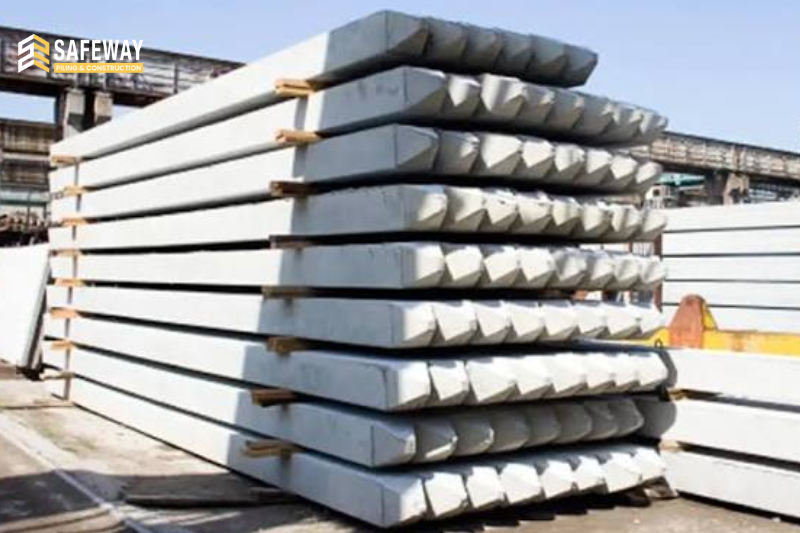
Safeway Piling & Construction supports contractors, consultants, and project owners with precast pile solutions for construction and foundation projects. The company focuses on project requirements when providing guidance about pile selection, supply, and planning.
Project-Based Support: The company can review project requirements and provide suitable guidance based on the planned foundation work.
Precast Pile Solutions: Safeway Piling & Construction can support precast pile requirements for different construction and foundation applications.
Technical Guidance: Contractors and project owners can receive guidance about pile requirements and suitable project approaches.
Quality Planning: Proper planning helps contractors manage precast pile production, supply, transportation, and installation requirements.
Construction Support: The company can support clients with foundation-related requirements and project coordination.
Quotation Support: Project owners and contractors can request pricing information based on their pile requirements and project conditions.
Contact Safeway Piling & Construction for Precast Pile Solutions
Choosing the correct Precast Pile Reinforcement is important for producing strong, durable, and reliable foundation piles. Reinforcement should match the pile design, expected loads, concrete requirements, installation method, and handling conditions.
Safeway Piling & Construction can support contractors, consultants, and project owners with precast pile supply, technical guidance, project consultation, and pricing information.
For precast pile requirements, contact Safeway Piling & Construction to discuss your project requirements and get a suitable quotation for dependable foundation solutions in Bangladesh.
Conclusion
Precast Pile Reinforcement plays an important role in the design and construction of reinforced precast concrete piles. Longitudinal bars, transverse reinforcement, reinforcement cages, spacers, and concrete cover must work together according to the approved structural design.
The reinforcement design should consider pile dimensions, design loads, soil conditions, installation method, handling stresses, environmental exposure, and connection requirements. Workers should also inspect the reinforcement carefully before concrete casting.
Proper reinforcement preparation and quality control can help produce reliable precast piles for different foundation projects. With proper design, casting, curing, handling, and installation, precast piles can provide effective support for many construction applications.
Safeway Piling & Construction can support project owners and contractors with precast pile solutions, technical guidance, supply, consultation, and pricing information according to project requirements.
Frequently Asked Questions
1. What is Precast Pile Reinforcement?
Precast Pile Reinforcement is the steel reinforcement placed inside a precast concrete pile to help it resist bending, tension, handling stresses, and other design forces.
2. Why is reinforcement used in precast piles?
Reinforcement helps precast piles resist different forces during casting, lifting, transportation, installation, and service.
3. What types of reinforcement are used in precast piles?
Common arrangements include longitudinal reinforcement with transverse reinforcement such as ties, links, or spirals. The exact arrangement depends on the approved structural design.
4. How is concrete cover maintained in precast piles?
Workers use suitable spacers and supports to maintain the required distance between the reinforcement and the mould surface.
5. Does every precast pile use the same reinforcement?
No. Reinforcement depends on pile size, length, design load, concrete strength, soil conditions, installation method, and project specifications.
6. Why should reinforcement be checked before casting?
Checking reinforcement before casting helps identify incorrect bar sizes, spacing problems, cage movement, insufficient cover, and other construction issues.
7. Can reinforcement affect pile handling?
Yes. Precast piles experience temporary stresses during lifting, transportation, and installation. The reinforcement and lifting arrangement should account for these conditions.
8. What happens if reinforcement cover is insufficient?
Insufficient cover can reduce the protection of reinforcement against environmental exposure and may affect durability. The required cover should follow the approved design and applicable standards.
9. Can precast piles be used for heavy structures?
Yes. Properly designed precast piles can support many types of buildings and infrastructure. Engineers should select the pile size and reinforcement based on project loads and ground conditions.
10. How can Safeway Piling & Construction help with precast piles?
Safeway Piling & Construction can support contractors and project owners with precast pile supply, project consultation, technical guidance, and pricing information based on project requirements.